2026-10-10
Why Melasma and Solar Lentigo Need Different Approaches: Distinguish Them Before Treatment
Explains why melasma and solar lentigo must be distinguished before laser treatment, how treatment and aftercare differ by area, and why self-removal is not recommended.
Many people assume that solar lentigo can be cleared with a single laser session.
Even brown spots that look alike can respond very differently: some fade with treatment, while others can actually become darker.
Whether melasma and solar lentigo were properly distinguished before treatment makes a real difference in the outcome.
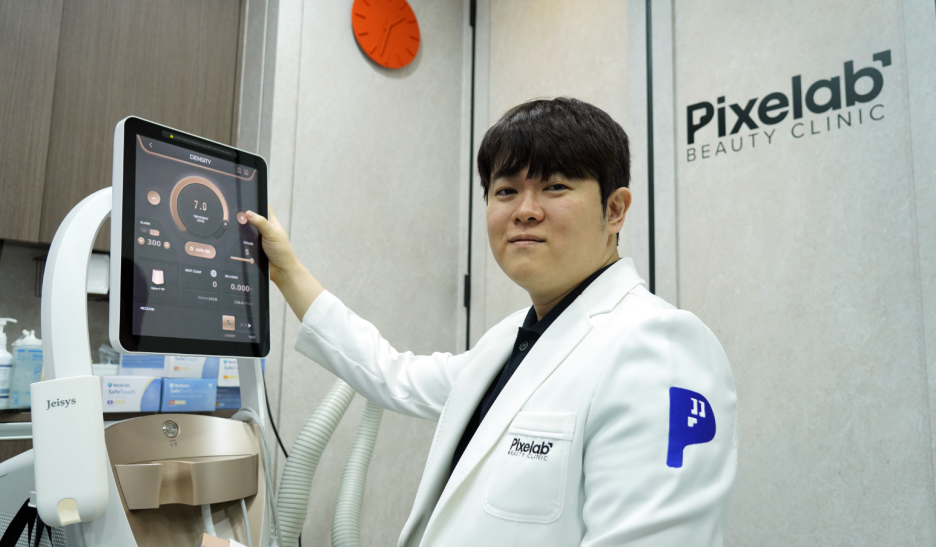
Hello, I am Dr. Song Jong-geun, director of Pixellab Plastic Surgery in Sinnonhyeon.
Have you been worried for a long time about the blotchy spots that seem to multiply every time you look in the mirror?
If you have found your way to this article, you have likely wondered whether solar lentigo can be removed as simply as a mole, and whether it will come back after removal.
I am a board-certified plastic surgeon. After completing a fellowship at a university hospital, I have spent many years treating pigmentation and scars with lasers. Drawing on that experience, I would like to explain the criteria I use to distinguish skin pigmentation and how each type should be approached.
I will also summarize what I explain in the clinic: why the same laser can produce different results, and what should be checked to reduce the risk of recurrence.
1. What Is Solar Lentigo?
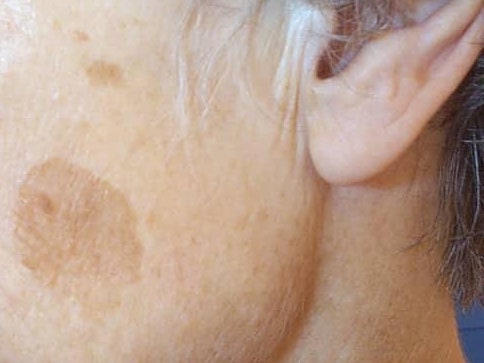
Solar lentigo is a lesion that develops when long-term, cumulative UV exposure increases melanin production and pigment deposition in the skin.
It typically has relatively well-defined borders and tends to appear gradually on areas that are frequently exposed to sunlight, such as the face and the backs of the hands.
It is often called “age spots” or “geommeobeoseot” (검버섯), but not every lesion referred to as geommeobeoseot is a solar lentigo.
Solar lentigines can also appear in people in their 20s and 30s who spend a lot of time outdoors or have accumulated significant UV exposure.
And if a spot is growing larger or you notice more of them appearing, I strongly recommend getting an accurate diagnosis first rather than leaving it alone.
2. Why Do Melasma and Solar Lentigo Need to Be Distinguished First?
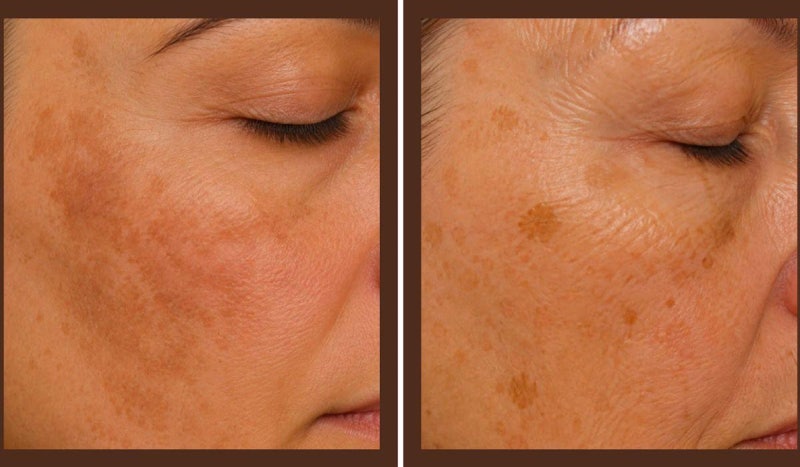
Two cheeks compared: on the left, broad brown patches with blurry edges; on the right, scattered brown spots with distinct outlines.
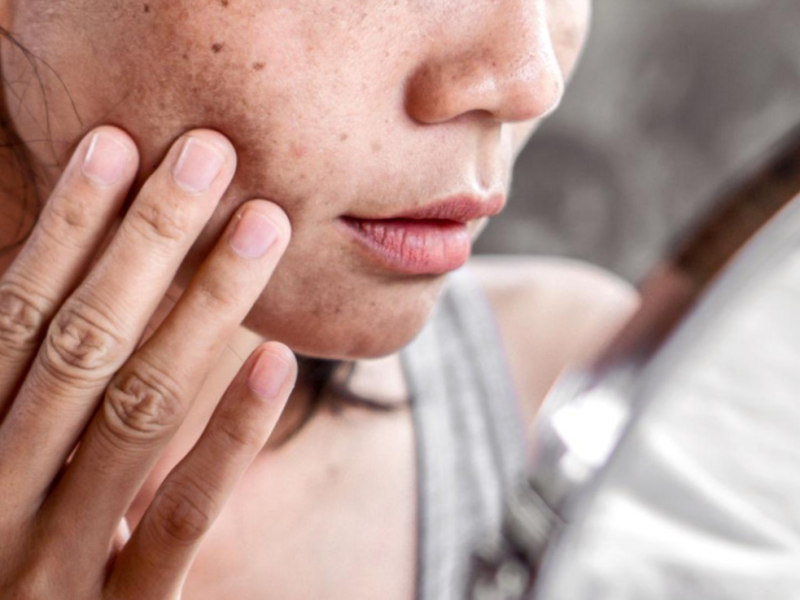
The problem is that many people have both pigments mixed together in the same area.
If high energy is applied uniformly to an area where melasma is mixed in, just as you would treat solar lentigo alone, the pigment can actually darken in response to the irritation.
That is why, before treatment, I use Metaview imaging to check the distribution and pattern of the pigment, and I design a separate treatment plan for each lesion.
When choosing a clinic, one of the most important criteria is whether it carries out a diagnostic and differentiation process before treatment.
I often meet patients in my clinic who chose a provider based only on price and then came back to seek treatment for pigmentation problems. For that reason, I want to stress how important it is for a treatment program to include this diagnostic process.
3. How Does Solar Lentigo Treatment Work?
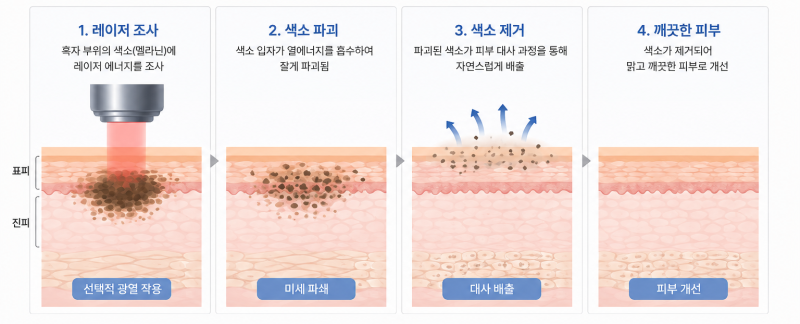
4-step diagram: laser targets melanin in the spot, the pigment breaks into fine particles, skin metabolism clears it, and skin looks clearer.
Lasers used to treat solar lentigo work by using energy at a specific wavelength that is absorbed by melanin, selectively breaking down or reducing the pigment.
What matters here is adjusting the energy to the size and depth of the lesion while minimizing irritation to the surrounding normal skin.
At Pixellab Plastic Surgery, we use three-stage cooling tailored to each patient’s skin condition to reduce irritation during treatment, and we apply regenerative injections as part of recovery care.
Even within the same face, each lesion differs in thickness and color intensity, so I examine each lesion individually and apply a different energy setting to each one.
In particular, solar lentigo treatment depends not only on the type of device but also on finely adjusting the energy to the lesion’s thickness and color and to the condition of the skin.
The success of solar lentigo treatment lies not in “the moment of removal” but in “the two weeks of recovery.”
4. Aftercare Determines the Results
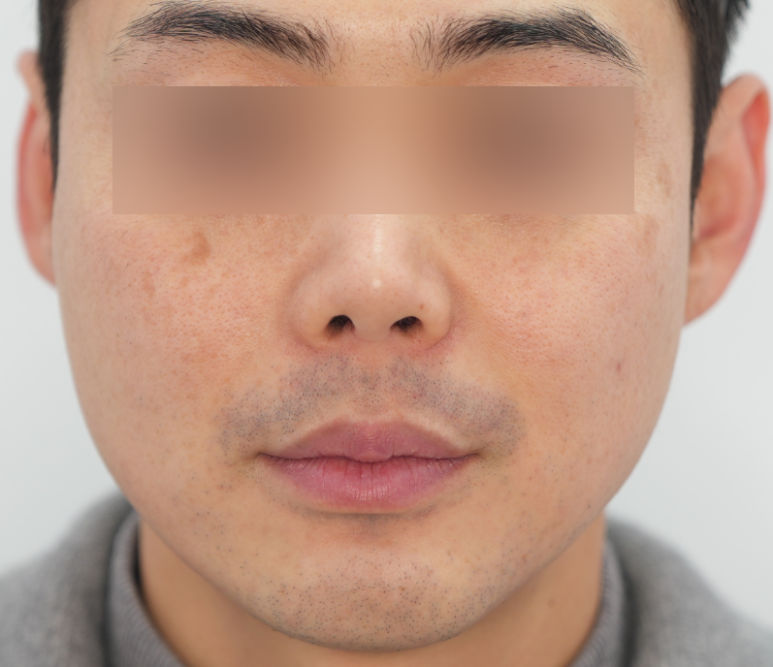
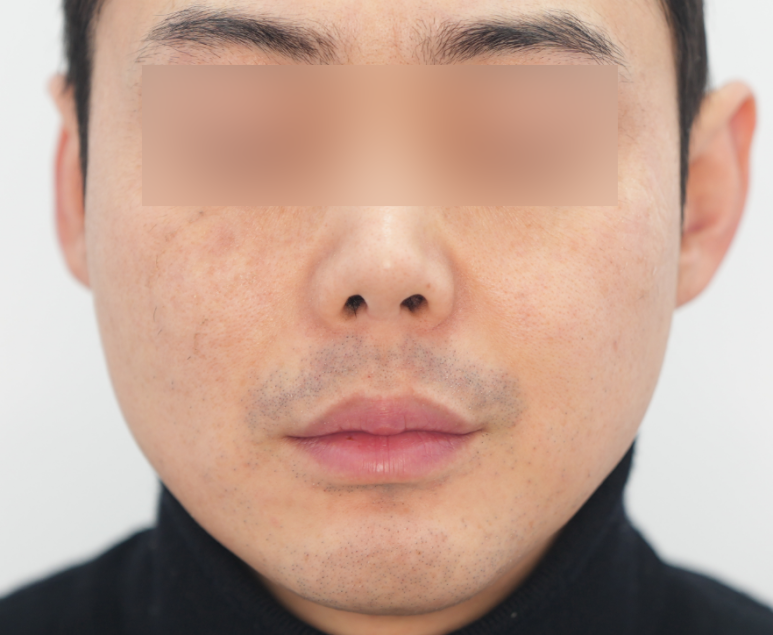
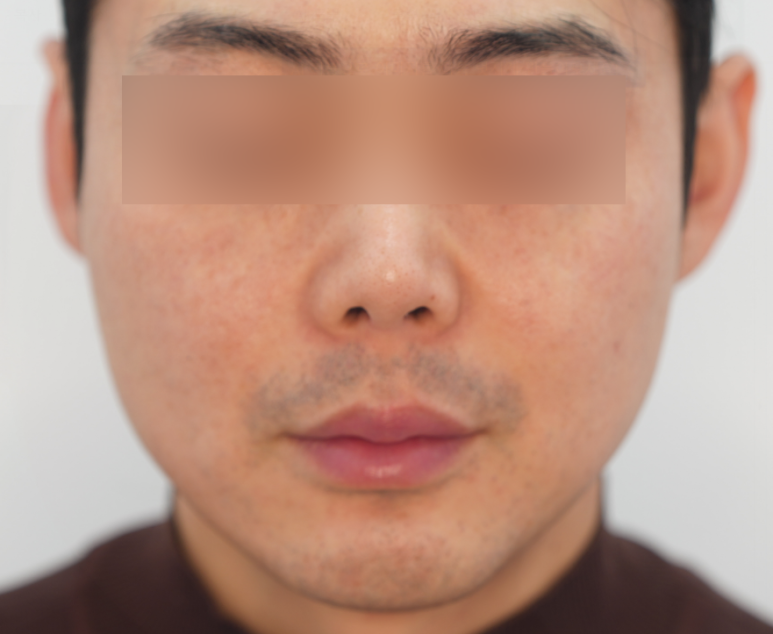
A further photo of the same man, with no prominent brown spots visible on his cheeks.
A thin scab may form on the treated area and fall off as healing progresses.
If UV exposure or friction is added during this period, post-inflammatory pigmentation may remain, or the treated area may look darker again.
That is why, at Pixellab Plastic Surgery, we prescribe an aftercare cream and protect the treated area with a moist wound dressing for about two weeks after treatment.
Treatment doesn’t end with the laser alone. Aftercare that reduces post-treatment pigmentation and skin irritation is part of the overall process, which is why we include it.
Afterward, patients should continue to use sunscreen consistently, regardless of the season.
Because cumulative UV exposure plays a major role in the development of solar lentigines, I always explain that sun-protection habits are an essential part of post-treatment care.
5. What Happens If Solar Lentigo Is Left Untreated?
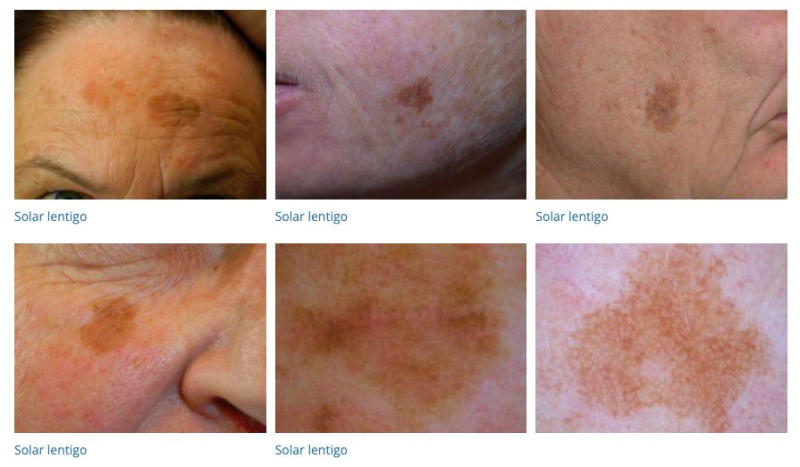
Solar lentigo is, for the most part, a cosmetic concern.
Solar lentigines often do not fade on their own over time, and some lesions may gradually darken or grow larger.
The number of sessions needed can vary depending on the size, color, and thickness of the lesion as well as the condition of the skin, so it is best to set a plan after your clinical evaluation.
6. Does the Approach Differ by Area, Such as the Face and the Backs of the Hands?
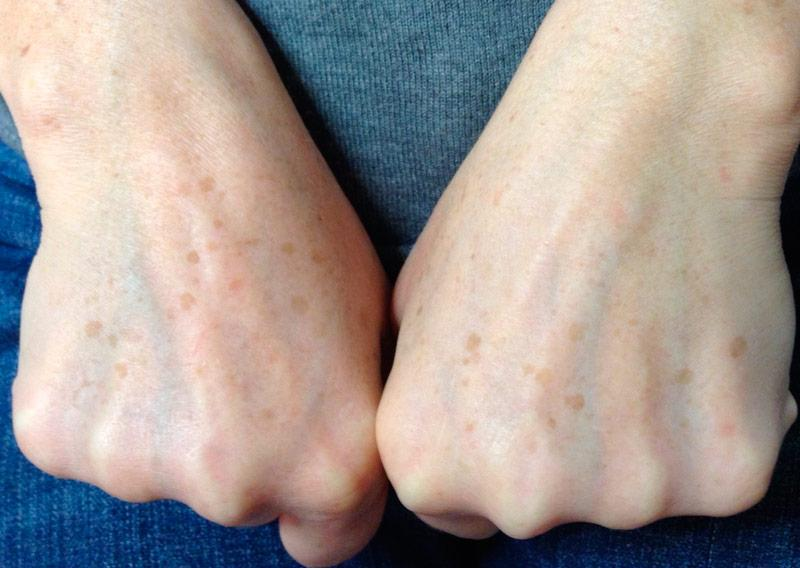
Even the same solar lentigo requires different considerations depending on where it appears.
The skin on the face and the backs of the hands differs in thickness, sebaceous gland distribution, and degree of UV exposure, so recovery after treatment can also vary.
That is why I set energy levels, treatment intervals, and the duration of moist wound dressing use differently depending on the area.
If a lesion is large or several lesions are clustered together, treating them in stages rather than all at once may be more favorable for recovery.
7. Why I Don’t Recommend Self-Removal
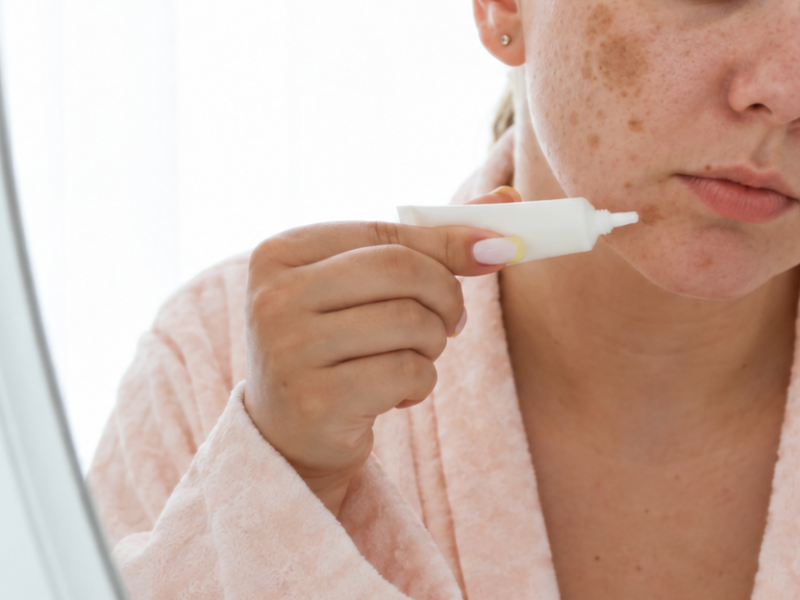
Some people try to remove spots themselves using over-the-counter “mole removal” ointments or by picking at them.
If you attempt self-removal without accurately identifying the type and depth of the lesion, it may not be fully treated. Conversely, excessive irritation may leave behind scarring or pigmentation.
In particular, trying to remove a lesion yourself without knowing what it is may cause you to miss one that needs differential diagnosis.
Even if you are in a hurry, I recommend deciding on the treatment method and scope only after a diagnosis.
8. In Some Cases, I Do Not Push Ahead With Treatment
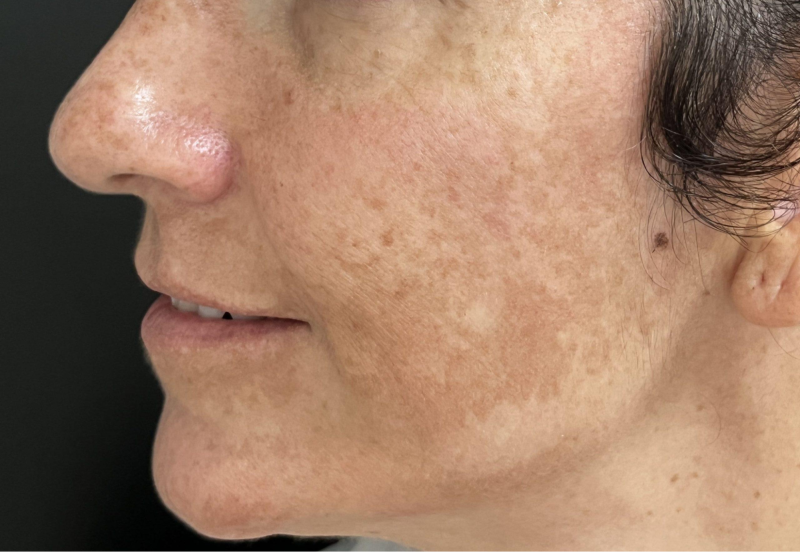
If melasma is widespread in the area, I prioritize stabilizing the pigmentation as a whole rather than treating only the solar lentigines first.
Even when the shape or color of a lesion is atypical, differential diagnosis of the lesion itself comes before any cosmetic treatment.
Following this order is important for developing a safe treatment plan.
9. Frequently Asked Questions
Q1. Can solar lentigo be removed in a single session?
Most cases respond well to one session, but some cases require two or more.
Q2. Will the treated area leave a scar?
Care during the period when a scab forms is important.
At Pixellab Plastic Surgery, we combine a moist wound dressing with post-treatment care, but recovery varies depending on each person’s skin condition.
Q3. Can solar lentigines come back after removal?
If UV exposure and skin irritation continue, new lesions can develop around the treated area.
I also provide guidance on daily lifestyle habits to help reduce the risk of recurrence.
Q4. Are geommeobeoseot and solar lentigo the same?
No. Geommeobeoseot (seborrheic keratosis) and solar lentigo are different skin lesions.
Solar lentigo is a pigmented lesion that appears when melanin increases in the skin. It is mainly related to UV exposure and is characterized by a relatively flat skin surface.
Geommeobeoseot, on the other hand, generally refers to seborrheic keratosis, which can appear as thickened or raised areas on the skin’s surface.
The two may look similar on the surface, but their causes and the changes in skin tissue differ, so it is important to choose the right treatment through an accurate diagnosis.
Q5. When can I wash my face and wear makeup again after solar lentigo treatment?
With the moist wound dressing in place, light face washing and makeup are possible starting on the day of treatment.
However, be careful not to let water touch the treated area directly or to cause friction.
Once the dressing is removed, you can wash your face and wear makeup again, but avoid strong rubbing and irritation while your skin is healing.
To sum up today’s article in one line: when it comes to solar lentigo treatment, what matters more than “which laser is used” is “in what order you approach it while distinguishing it from melasma.”
If you are wondering whether your pigmentation is solar lentigo or melasma, I recommend checking your Metaview analysis results in a consultation at Pixellab Plastic Surgery.



*This post was written directly by Pixellab Plastic Surgery Clinic for the purpose of providing medical information and promotion, in compliance with Article 56, Paragraph 1 of the Medical Service Act. All treatments and surgeries carry the possibility of side effects that vary by individual, so we recommend making a decision only after thorough consultation with qualified medical professionals.