2026-10-16
Why Acne Scar Treatment Needs Different Approaches Even with the Same Laser | Conference Lecture by Dr. Jong-geun Song of Pixellab
Dr. Jong-geun Song of Pixellab shares takeaways from a scar treatment symposium, explaining why acne scars need tailored approaches even with the same UltraPulse Alpha laser.

Hello.
This is Dr. Jong-geun Song, Chief Director of Pixellab Plastic Surgery Clinic.
Lately, I have been quite busy with conferences and lecture schedules.

On October 10, I was invited as a speaker at the 5th SCAAR Free Symposium.
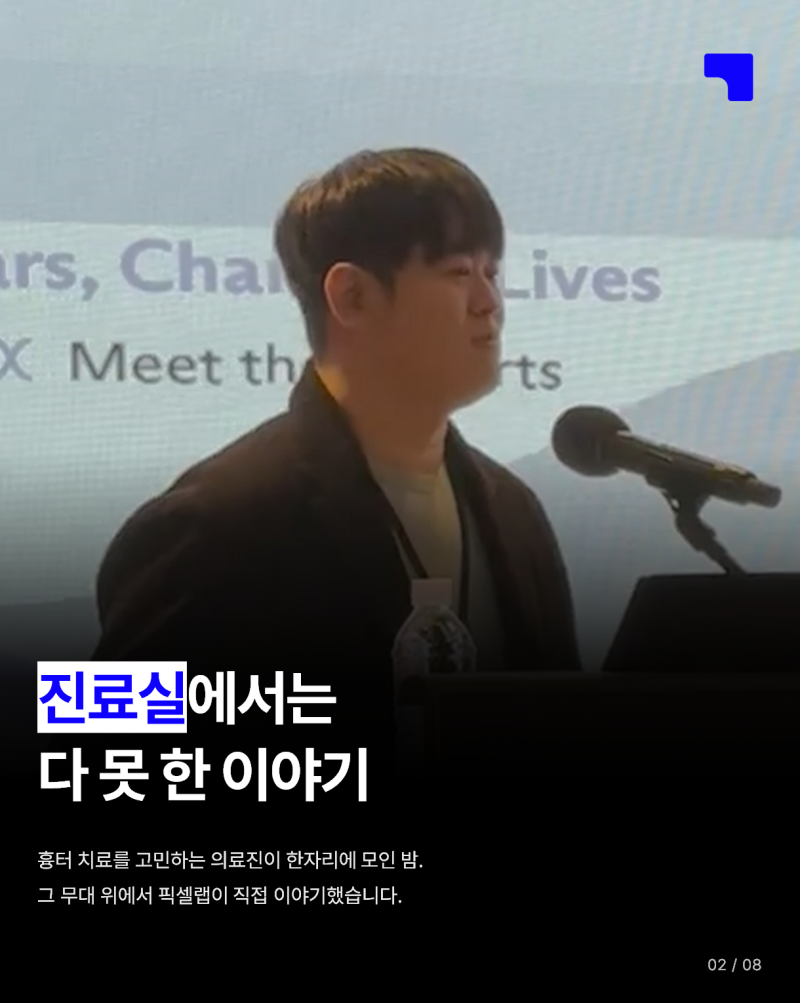
This time, I spoke before many medical professionals who use the UltraPulse Alpha. I shared insights on scar treatment that I have been pondering and learning from in my clinic every day. Today, I would like to share a bit about that day.
Medical professionals with a strong interest in scar treatment came together in one place.
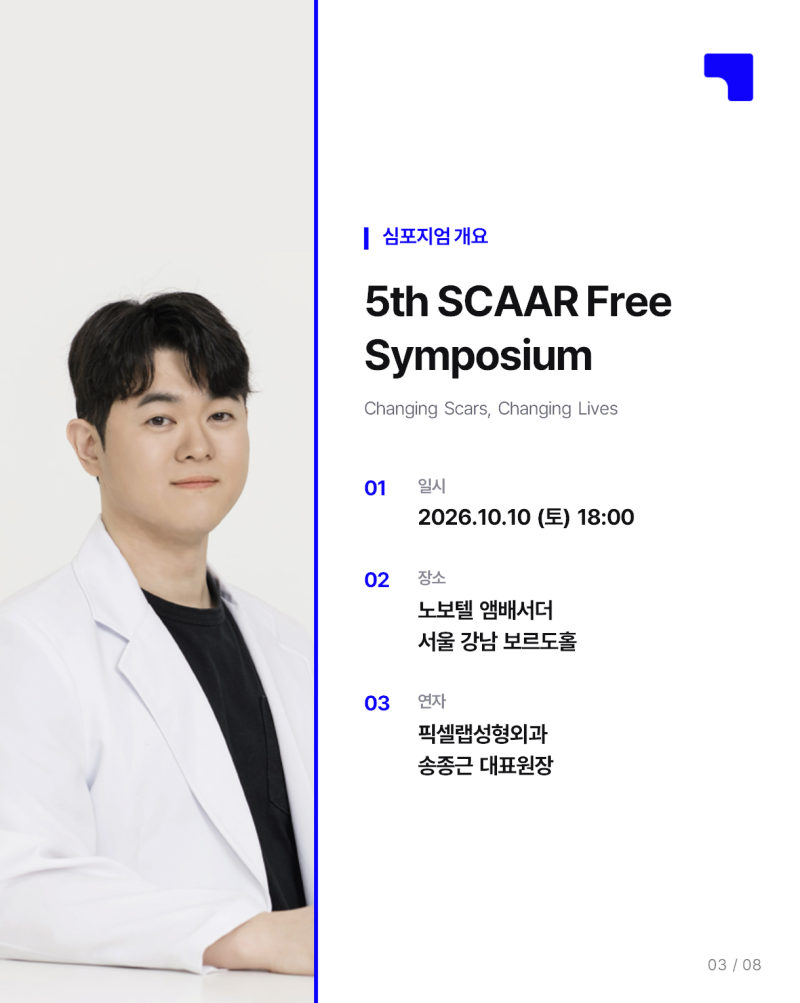
This symposium was held under the theme \"Changing Scars, Changing Lives.\" Many medical professionals who are deeply concerned with scar treatment gathered to share their own experiences and treatment approaches.
At Pixellab, I presented on the aspects I have long considered important while treating patients with acne scars.
Honestly, speaking before other medical professionals always makes me a little nervous. It is quite different from explaining things to patients. Since the audience was made up of doctors facing similar concerns, I prepared to explain in more concrete terms the criteria I use to diagnose scars and plan treatments.
Acne scars are far more diverse than you might think.
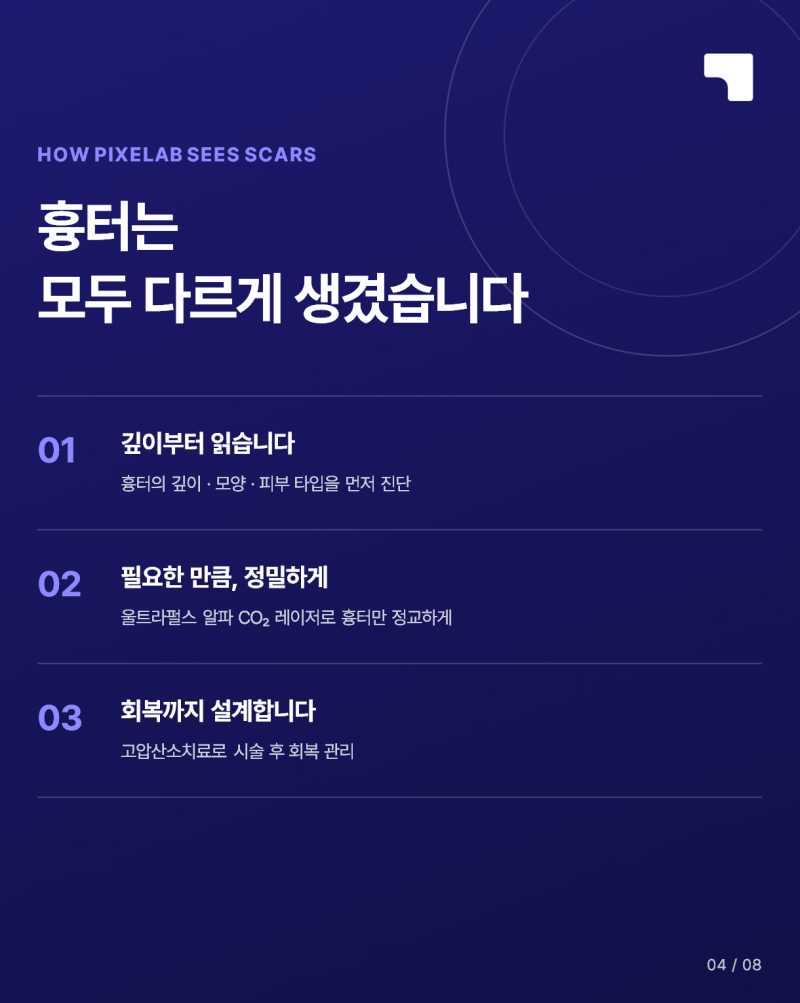
When treating patients with acne scars, there is one thing I consider most important.
That is, examining each scar carefully.
When we think of acne scars, we tend to picture simple depressions in the skin. However, when you look closely at patients' skin, the shape and depth of scars vary greatly. Some are narrow and deep, like an ice pick, while others are spread over a wider area.
Even on the same patient's face, the scars on the forehead, cheeks, and temples are often quite different from one another.
So what would happen if we treated all of these scars with the same method? In my view, that is not a good approach. Because each scar has its own characteristics, the treatment method also needs to be different. In this lecture, I focused on these points.
Even with the same UltraPulse Alpha, how it is used is what matters.
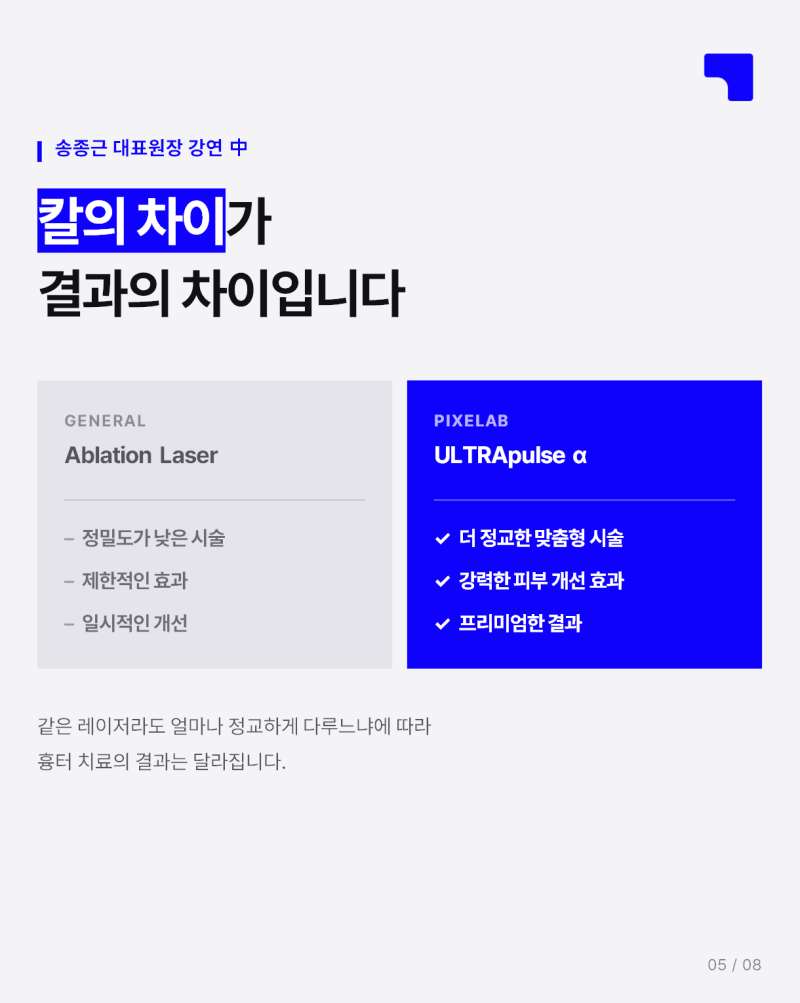
At Pixellab, we use the UltraPulse Alpha laser in acne scar treatment. The UltraPulse Alpha is a CO2 laser device that allows various settings to be adjusted according to skin condition and treatment goals. What matters here is not using high energy indiscriminately. We must first assess the type of scar, its depth, and the condition of the surrounding skin. Then, we design a treatment plan using an appropriate method for each area.
When talking with patients, I often share the following.
Acne scars are often difficult to treat with a single method across all areas.
This is because each patient's scars differ, and the approach may vary by area even within the same face. At this conference, I also shared the standards I consider important in my clinical practice, including what to consider when using the UltraPulse Alpha.
Of course, using the same device does not produce the same results for every patient. Treatment outcomes can vary depending on skin condition, scar characteristics, and the recovery process after the procedure.
I also place great importance on recovery after treatment.
Another aspect that cannot be overlooked in acne scar treatment is the recovery process.
When I consult with patients, they often ask questions like these:
\"Doctor, how many days do I need to rest after the procedure?\"
\"How long does the redness last?\"
\"When can I resume my daily activities?\"
It is only natural for them to wonder. Even when people want treatment, many find the recovery period burdensome because of work, school, or important commitments.
That is why, when deciding on a treatment method, I try to consider not only the treatment goals but also the patient's daily life and recovery circumstances.
This is also why I am interested in recovery management using hyperbaric oxygen therapy at Pixellab.
Of course, hyperbaric oxygen therapy does not necessarily speed up recovery for every patient or always reduce post-procedure redness. Appropriate management must be determined according to each patient's condition, and further research is needed on the effects of hyperbaric oxygen therapy after laser treatment.
However, I believe it is important to think not only about how to perform the laser treatment, but also about the recovery process that follows.
It was meaningful to share experiences with many medical professionals.
At this symposium, I was able to share experiences and opinions on scar treatment with many medical professionals. Normally, we meet patients in our own clinics, but when we come together like this, we can learn about different approaches and clinical experiences, which is valuable. I also had some points to reflect on after hearing from other physicians.
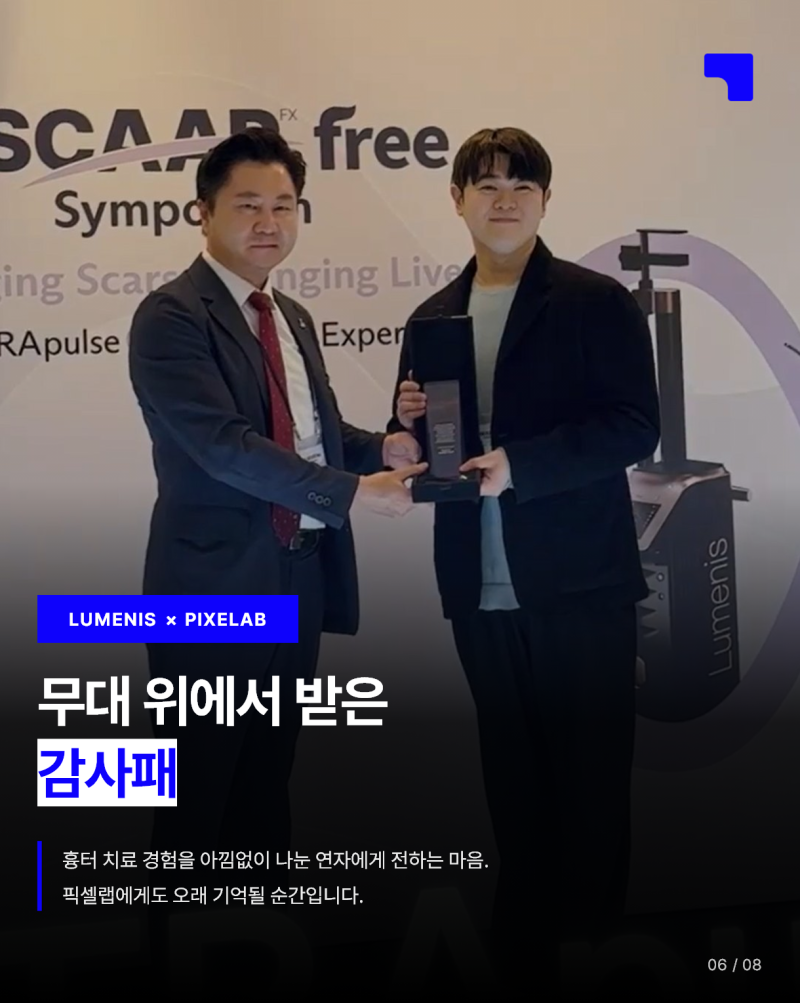
I was also honored to receive a plaque of appreciation at this event. I was already grateful for the chance to share my experiences with scar treatment, so receiving such a meaningful gift made me very happy.
In the future, if I have the chance to attend similar events, I want to generously share what I know.
Learning continues even outside the examination room.

I believe acne scar treatment is a field that requires continuous study. Even as new equipment is introduced and treatment methods advance, what matters most in the end is understanding each patient's skin properly.
Even now, I still think and study every time I meet a new patient: which method would be most suitable for this person's scars, what precautions I need to take, and how the recovery process should be managed.
I will continue to actively take part in conferences and research activities and share experiences with various medical professionals. I also hope to apply what I learn in these settings well in my actual clinical practice.
I would like to thank the staff and medical professionals who made this symposium such a good experience.
Thank you for reading this long post today as well.
Pixellab Plastic Surgery Clinic
Sincerely, Chief Director Jong-geun Song



*This post was written directly by Pixellab Plastic Surgery Clinic in accordance with Article 56, Paragraph 1 of the Medical Service Act, for the purpose of providing medical information and promotion. All treatments and surgeries carry the possibility of side effects depending on the individual, so we strongly recommend making a decision only after thorough consultation with qualified medical professionals.
Frequently Asked Questions
Do you use the same laser for all acne scars?
No. Because each scar has different characteristics, the treatment method must also differ. Acne scars range from narrow, deep, ice-pick shapes to widely spread types, and the condition can vary by area even on the same face, such as the forehead, cheeks, and temples.
What do you check first when treating acne scars with the UltraPulse Alpha?
The type and depth of the scar and the condition of the surrounding skin are examined first, and a treatment plan is then designed. The UltraPulse Alpha is a CO2 laser device whose settings can be adjusted according to skin condition and treatment goals. The lecture emphasized that strong energy is not always used indiscriminately.
How long is the recovery period after acne scar treatment?
This article does not provide a specific recovery period. Treatment progress can vary depending on skin condition, scar characteristics, and the recovery process after the procedure, so it is best to confirm this during a consultation.
Does hyperbaric oxygen therapy reduce post-procedure redness?
No, it does not necessarily reduce redness for every patient. Hyperbaric oxygen therapy does not speed up recovery for all patients either, and management must be determined according to each patient's condition. Additional research is needed on its effects after laser treatment.
Will all patients get the same results with the same device?
No. Even when using the same device, not all patients will see the same results. Treatment progress may vary depending on skin condition, scar characteristics, and the recovery process after the procedure.
Should I consult before getting acne scar treatment?
Yes. It is recommended to make a decision after thorough consultation with qualified medical professionals. The post also notes that all treatments and surgeries may carry the possibility of side effects depending on the individual.