2026-10-24
A Plastic Surgeon from Mexico Visits Pixellab: What Was the First Thing Examined in the Clinic?
Dr. Martinez Wagner, a plastic surgeon from Mexico, visited Pixellab Plastic Surgery Clinic. The post covers the clinic tour, from the waiting area to skin diagnosis and record management.

Hello, this is Song Jong-geun, chief director of Pixellab Plastic Surgery Clinic.
Recently, we welcomed a very special guest who traveled all the way to Pixellab. Dr. Martinez Wagner, a plastic surgeon from Mexico, visited us. Choosing Pixellab among the many clinics in Korea made this time especially meaningful for us.

During this visit, our director Kim Seon-hyeong mainly led the clinic introduction and conversation, while I joined in to exchange greetings. Today, I would like to share the conversations we had that day and the scenes from our tour of the clinic.
How does a doctor from another country view a Korean clinic?

Whenever I have the chance to visit another clinic, certain questions naturally come to mind. What equipment do they use? How do the medical staff approach treatment? How is patient care managed?
Talking with Dr. Martinez Wagner this time, I had similar thoughts. When medical staff visit another clinic, they may be curious not only about the interior or equipment, but also about how the clinic actually runs day to day.
During this visit, we toured various areas of Pixellab with Director Kim Seon-hyeong and had many engaging conversations. Several scenes stayed with me, so I would like to share a few of them.
Starting with the first space patients encounter
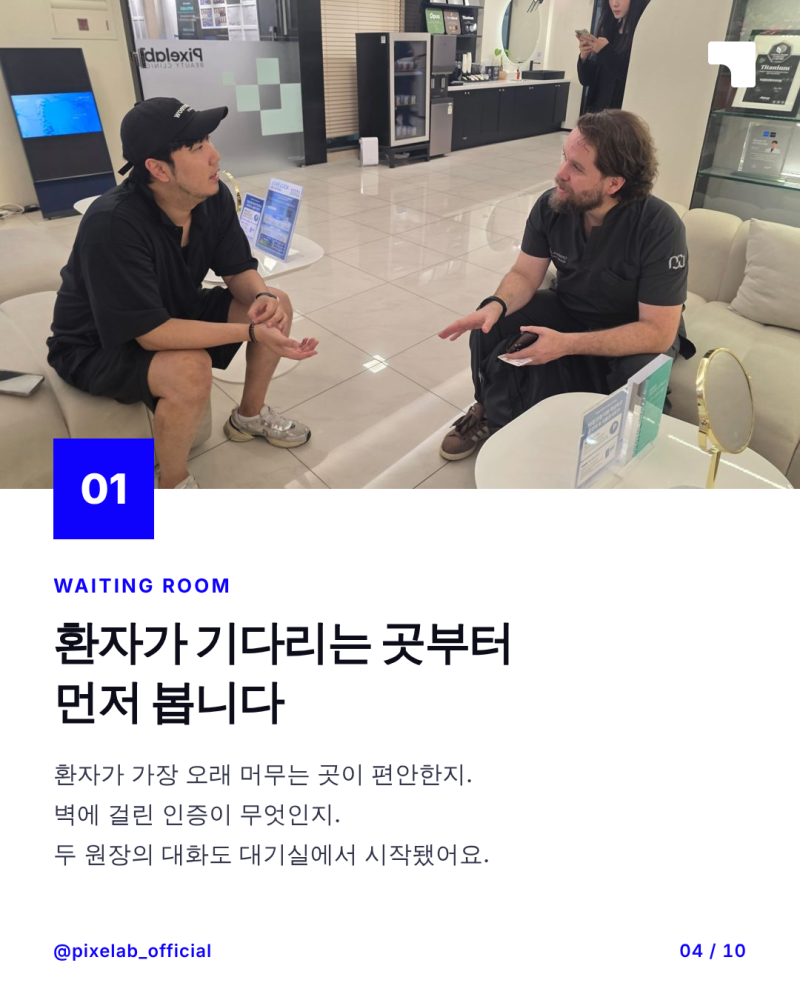
We began by touring the waiting area. I believe the waiting room is just as important to patients as the treatment room. It is where people check in, wait for their consultation, and prepare for treatment, often spending more time there than they expect. While it is a familiar space for our medical team, for first-time visitors it can be their first impression of the clinic. That is why I consider not only the treatment rooms, but also the spaces where patients spend their time, to be important.
The conversation that started in the waiting area naturally led to talk about Pixellab's treatment approach and operating system.
I believe that what matters most in treatment is an accurate starting point.
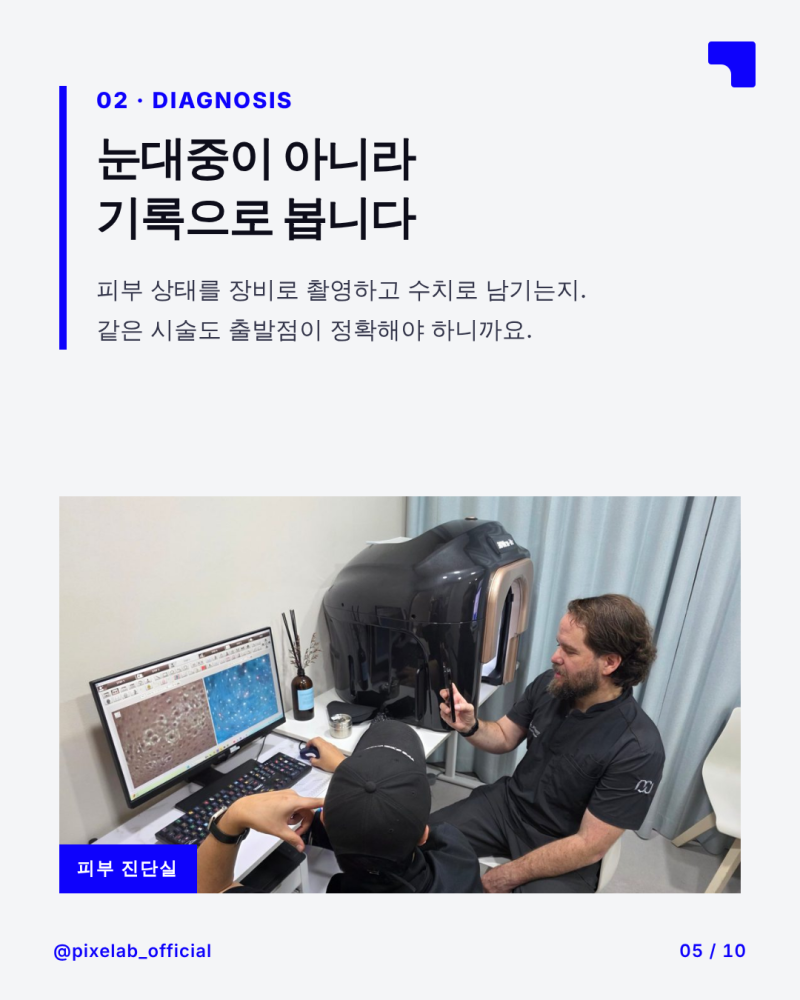
On this visit, we also looked at Pixellab's skin diagnosis process. In skin treatments, I believe accurately assessing the current condition of the skin is just as important as choosing the treatment itself. In particular, acne scars and skin texture irregularities may look similar on the surface, but their depth, shape, and overall skin condition can all be different.
For this reason, it is important to thoroughly examine the patient's skin, and, as needed, use diagnostic equipment and photographic records to confirm the current condition. |
Even when the same laser is used, the same procedure cannot be applied to every patient. It is also meaningful to keep a record of this diagnostic process. Reviewing the skin before and after a procedure helps when planning future treatments. Of course, measurement results from equipment alone cannot determine everything. Clinicians' direct examinations and the patient's overall condition must be considered together.
We also toured areas that patients rarely get to see.
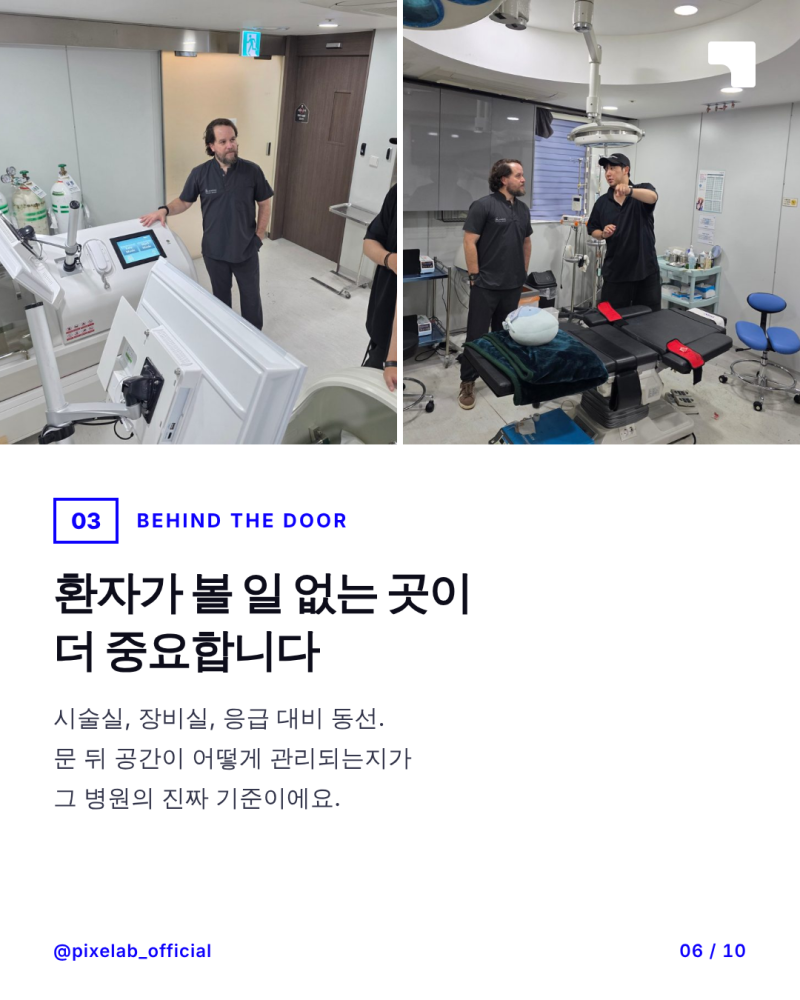
Beyond the treatment areas, we also toured spaces that patients don't often see directly, including the procedure rooms, the equipment room, and the facilities and traffic flow prepared for emergencies. Most visitors only experience the consultation and procedure rooms, but a great deal of preparation and management takes place behind the scenes. I believe these areas are extremely important to clinic operations. No matter how good the equipment is, it is essential to plan how it will be maintained and how to respond in an emergency. These aspects may not stand out day to day, but they are areas that medical staff and employees must consistently pay attention to.
After all, isn't record-keeping and management the most important thing?

During this visit, we also talked about Pixellab's treatment records and patient management system. I believe a patient's medical record should go beyond simply logging past procedures. It should allow us to see which treatments were received, how the skin looked afterward, and what needs to be considered at the next visit. This is especially important for acne scars, which often require repeated treatments and where reviewing previous treatment details thoroughly matters. These records become useful references when planning the next procedure. Of course, since these records contain personal information, they must be managed securely. This was once again a meaningful time to share views on the treatment experiences and management practices of two clinics.
Don't the standards for a good clinic stay similar regardless of country?

Mexico and Korea are far apart, and there are surely differences in medical environments and treatment culture. However, I don't think the commitment to providing appropriate care to patients and carefully managing every necessary step of the treatment process differs much. For me, this visit was an opportunity to look at the everyday routine of a clinic I know well from a different perspective. When you explain spaces and processes you normally take for granted to medical staff visiting for the first time, you start to reconsider what they mean.
I also came away with one more realization.
A good clinic is not simply a space that looks good; it is a place that can thoroughly explain its treatment process and operating methods.
I, too, will keep thinking carefully about how Pixellab can become that kind of clinic.
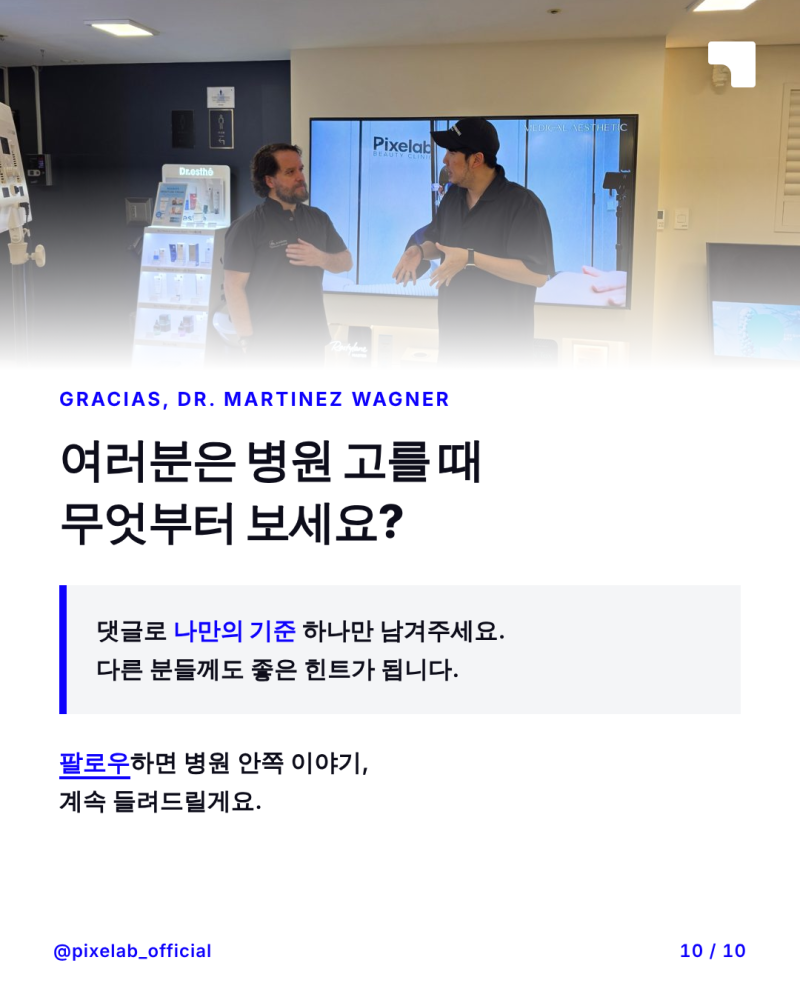
Thank you for visiting from so far away.
I would like to thank Dr. Martinez Wagner, who came all the way from Mexico to visit Pixellab. I also want to express my gratitude to Director Kim Seon-hyeong and the staff who prepared this visit and introduced various parts of the clinic. I believe it is always meaningful when medical professionals who practice in different environments come together and share their experiences. Through meetings like this, I find there is much more to learn and reflect on. Going forward, I hope Pixellab continues to have opportunities to connect with a range of medical professionals and share experiences. I will also do my best to apply what we learn in the process to real patient care.
Thank you for reading this long post today.
Pixellab Plastic Surgery Clinic
Sincerely, Chief Director Song Jong-geun




*This post was written directly by Pixellab Plastic Surgery Clinic in compliance with Article 56, Paragraph 1 of the Medical Service Act, for the purpose of providing medical information and promotion. All treatments and surgeries carry the possibility of side effects that vary from person to person, so we recommend making a decision only after thorough consultation with qualified medical professionals.
Frequently Asked Questions
What did the doctor from Mexico look at first in the clinic?
The first area they toured was the waiting space that patients encounter first. According to the post, the waiting room is just as important as the treatment room, and it can be a first-time visitor's first impression of the clinic.
Why is skin diagnosis important in skin treatments?
The post explains that accurately assessing the current skin condition is just as important as choosing the treatment. Acne scars and skin texture irregularities can look similar on the surface but differ in depth, shape, and overall skin condition, so it is necessary to confirm them using diagnostic equipment and photographic records.
What are treatment records used for?
Recording skin conditions before and after a procedure provides a reference when planning future treatments. The post also notes that for acne scars, which often need repeated treatments, it is important to thoroughly review previous treatment details.
Is treatment decided based on equipment measurement results alone?
No. Equipment measurement results alone cannot determine everything. The post explains that clinicians' direct examinations and the patient's condition must be considered together.
If the same laser is used, do all patients receive the same treatment?
No. The post explains that even when the same laser is used, the same treatment cannot be applied to every patient. For this reason, thoroughly examining each patient's skin and using diagnostic equipment and photographic records as needed is considered important.
What should you do before deciding on a treatment?
It is recommended to make a decision only after a thorough consultation with qualified medical professionals. The post also notes that all treatments and surgeries carry a possibility of side effects, which vary by individual.