2026-11-12
Why UltraPulse Scar Laser Treatment Should Be Done by a Board-Certified Plastic Surgeon
This guide explains why UltraPulse Alpha scar treatment should be guided by accurate diagnosis of scar depth and structure, with a plastic surgeon's personalized plan.
The key to scar treatment lies not in the name of the laser, but in accurately assessing the depth and structure of the scar.
UltraPulse Alpha enables treatment tailored to each scar type through precise beam delivery and depth control.
Gradual improvement can be expected when accurate diagnosis and a consistent treatment plan go hand in hand.
Hello,
This is Dr. Song Jong-geun, director of Pixel Lab Plastic Surgery Clinic in Gangnam.
As you research laser scar treatments, you have probably asked yourself:
- There are so many types of lasers. Which one should I choose? - Can my scar really get better?
I'm sure you've had these thoughts at least once.
These are also questions I hear constantly during consultations.
During my time as a fellow at a university hospital, I performed hundreds of facial surgeries and published papers on burn and wound treatment.
Over the years, I have worked closely with skin tissue and scars.
That experience led me to one firm conviction.
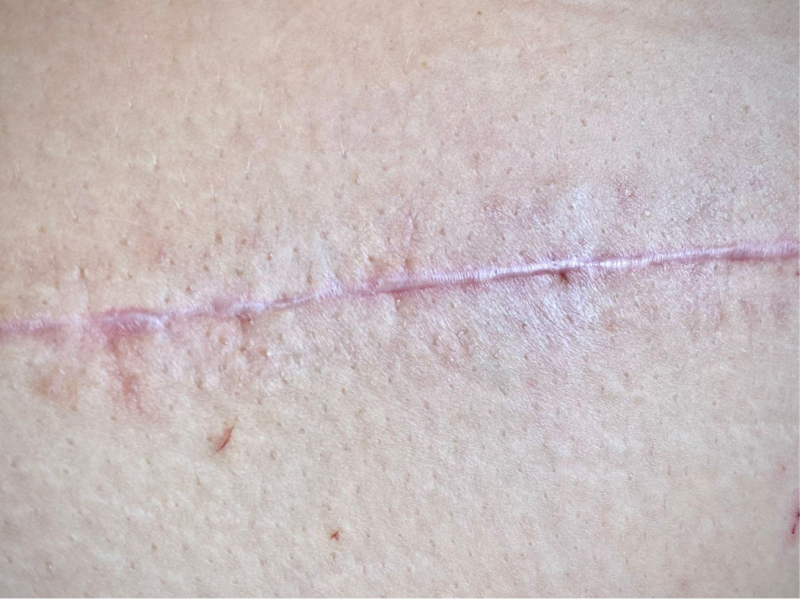
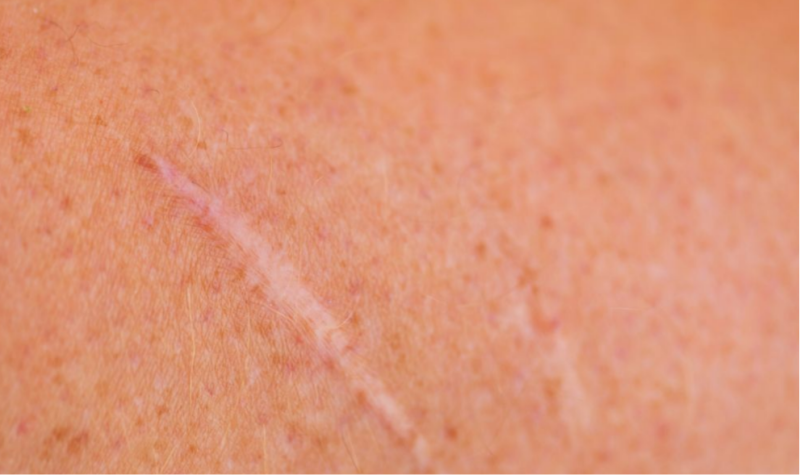
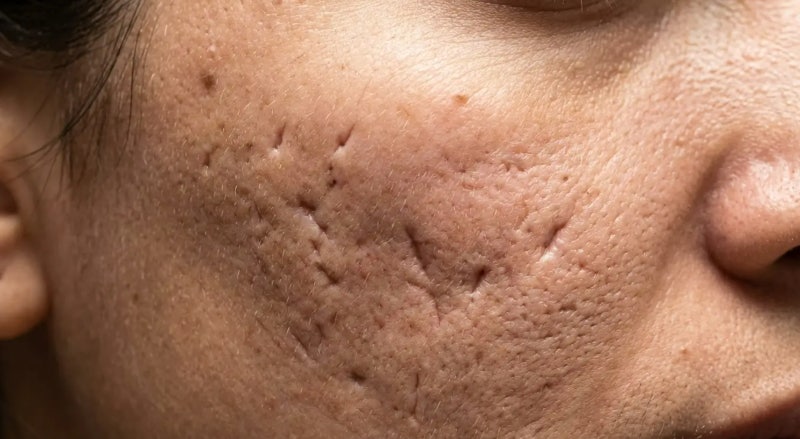
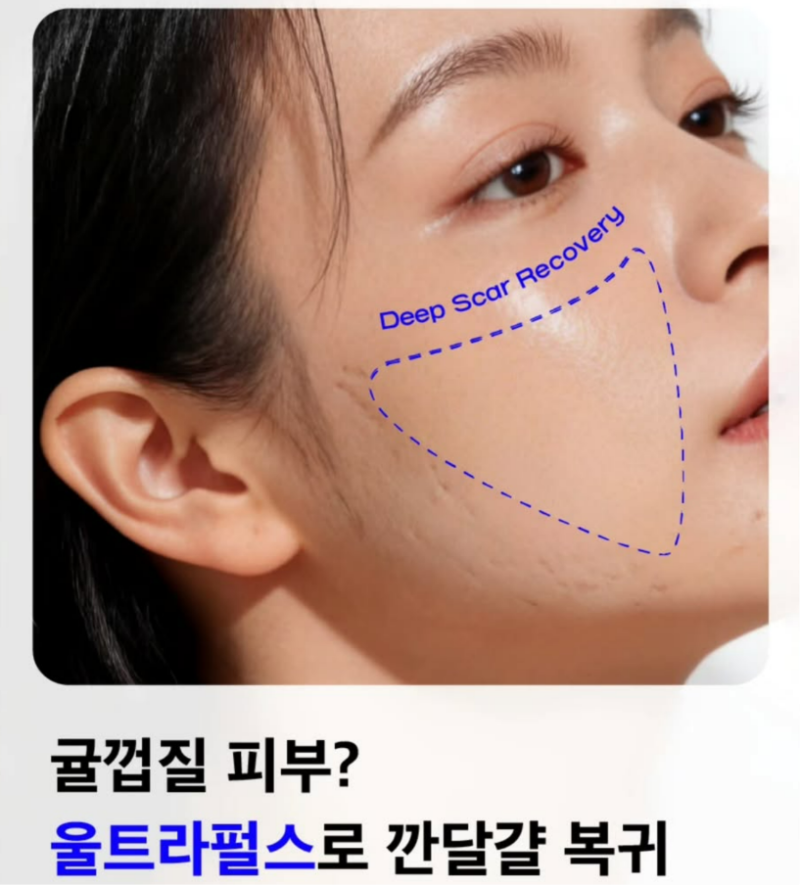
Close-up of a cheek with depressed acne scars and enlarged pores.
Simply put, the key to scar treatment is not the name of the laser, but the ability to accurately read the depth and structure of a scar.
I am currently the first plastic surgery user of UltraPulse Alpha, and I have completed an elite bootcamp that headquarters limits to about 50 participants worldwide. Through this, I have personally confirmed the potential of this device.
That is why I can give you a candid breakdown of acne, surgical scars, and hypertrophic scars.
If you are considering UltraPulse treatment, please read through to the end to learn why I recommend this laser and how it differs from conventional lasers.
Why scar treatment in Gangnam is hard to judge from search results alone
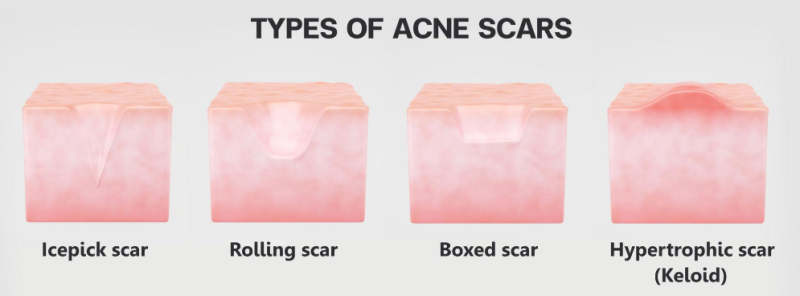
Diagram of acne scar types: icepick, rolling, boxed, and hypertrophic (keloid) scars.
If you search online for “scar laser treatment,” you'll find a wide range of laser names, including CO2 fractional, Erbium YAG, and Pico.
The descriptions often repeat similar phrases like “collagen regeneration” and “skin remodeling,” which makes it easy to wonder, “So which one is really the best?”
However, general explanations like these make it hard to grasp the important differences.
Scar treatment isn't simply about burning the surface of the skin with a laser. What matters most is accurately assessing the skin's structure and the condition of its deeper layer, the dermis.
In other words, even acne scars that look alike can require completely different approaches depending on their depth, shape, and whether they are hypertrophic.
You can find more details on which laser to consider for each scar type in the article below.
▼
Why I chose UltraPulse Alpha
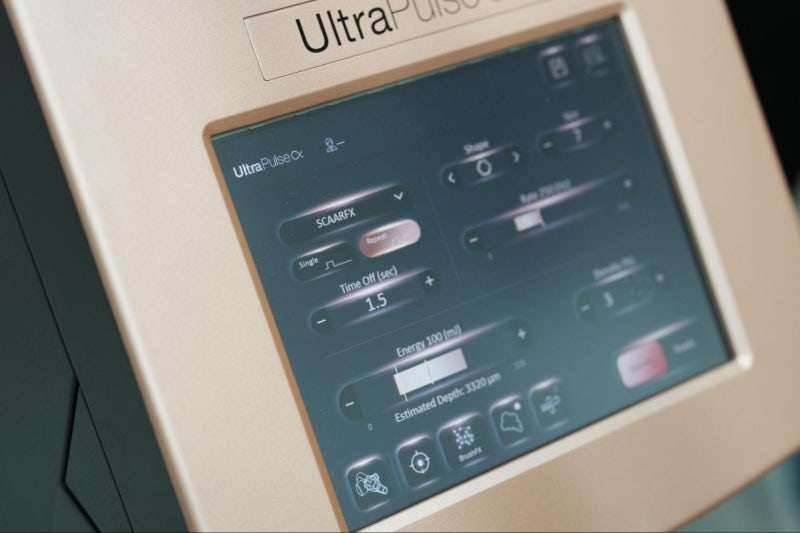
Touchscreen of the UltraPulse laser showing SCAARFX mode settings such as energy, density and depth.
UltraPulse Alpha is a top-tier, high-end CO2 fractional laser, among the most expensive devices in Korea at around 400 million won.
A high price doesn't automatically mean better results, but after using it in clinical practice, I've noticed clear differences from conventional devices.
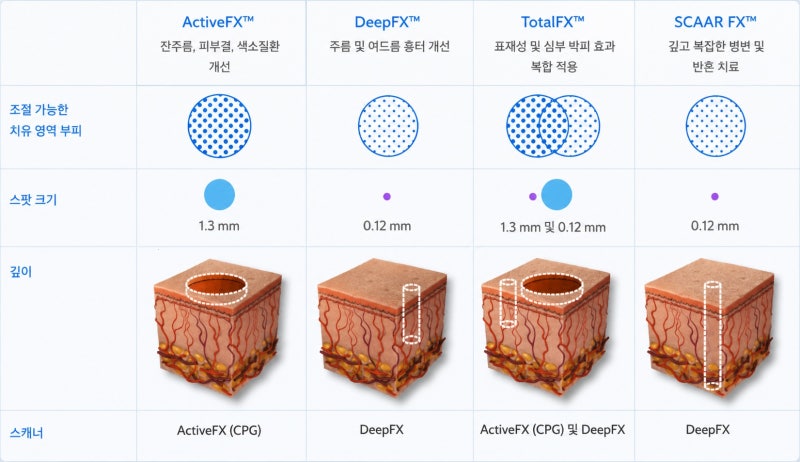
Chart: ActiveFX (fine lines, texture), DeepFX (wrinkles, acne scars), TotalFX (combined) and SCAAR FX (deep scars) by spot size and depth.
First, beam size precision.
UltraPulse Alpha's laser beams are finer than even 34G–35G needles.
Because each beam is extremely precise, it can selectively remove only the damaged tissue while minimizing damage to the surrounding healthy tissue.
This is the fundamental reason for its faster recovery compared with conventional CO2 fractional lasers.
Second, customized energy control by depth.
The depth of skin damage varies from person to person.
Shallow atrophic scars, deep ice pick scars, and raised hypertrophic scars each require different energy depths and densities.
UltraPulse Alpha lets you finely adjust these settings to match each patient's skin condition, enabling precise, customized treatment by area and scar type.
Third, the synergy of combination treatments.
When treating scars with UltraPulse, I often use combined approaches rather than a single procedure alone.
A micro-coring device (Endum) physically breaks up the fibrotic tissue at the base of the scar, while radiofrequency plasma (Pixel) promotes dermal regeneration.
We also apply an omakase-style combination protocol that delivers regenerative ingredients deep into the skin using a needle-free injector (Skinjet) or Juvelook, and we adjust the combination based on each patient's condition. This customized design is the know-how of Pixel Lab.
UltraPulse scar treatment recovery process and aftercare
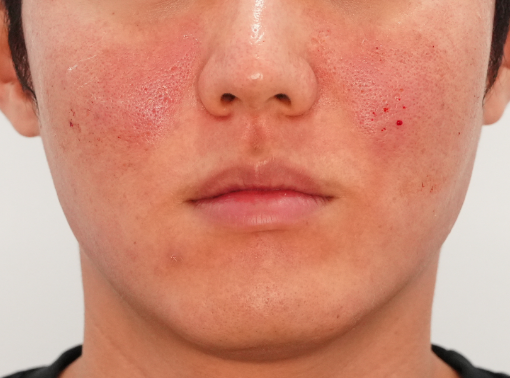
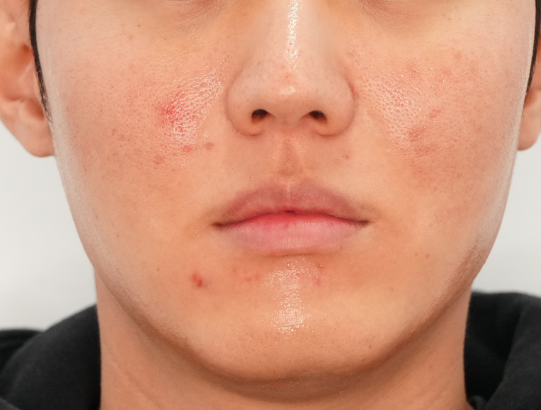
The lower face with mild redness remaining on the cheeks and a few small red spots.
After UltraPulse treatment, you may experience redness and a stinging sensation for 2 to 3 days.
Recovery varies from person to person, but most patients recover within about two weeks.
At Pixel Lab, we provide a range of aftercare treatments after UltraPulse Alpha procedures to ensure a comfortable recovery.
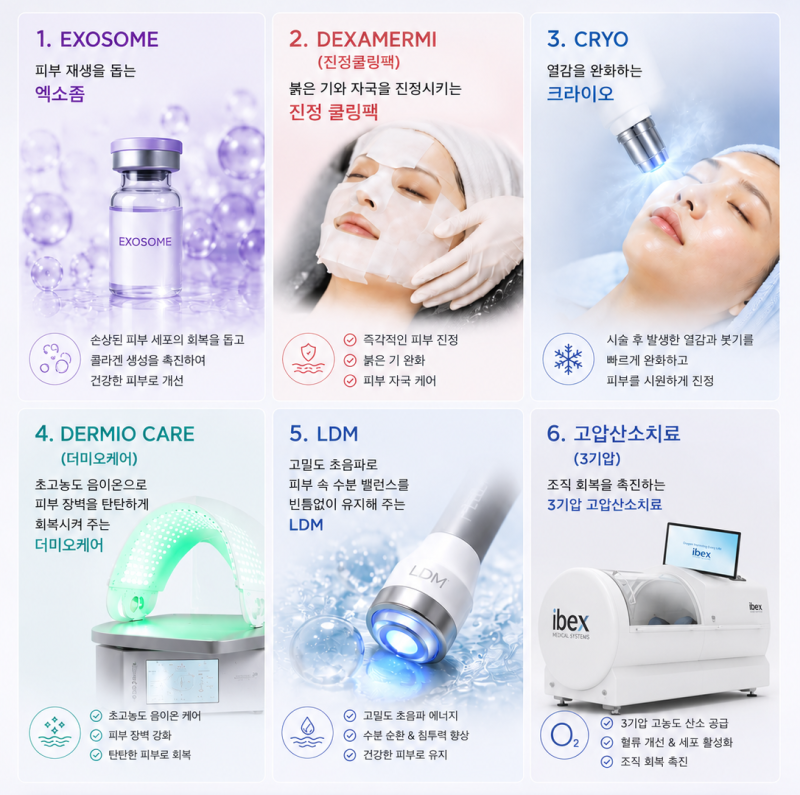
We offer exosomes to support skin regeneration, Dexamummy to soothe redness and irritation, and Cryoga to relieve heat sensation.
In addition, we use Dummy Care, which firmly restores the skin barrier with ultra-high-concentration anions, and LDM, which uses high-density ultrasound to keep the skin's moisture balance intact.
Finally, we add 3-atmosphere hyperbaric oxygen therapy to promote tissue recovery, so your skin receives thorough, meticulous care.
I always emphasize how important sun protection is after treatment.
Even if scabs form, avoid forcing them off. Letting them fall off naturally is how you help your collagen recover.
Laser sessions are typically spaced 6 to 8 weeks apart. Depending on the depth and extent of the scar, many patients notice gradual improvement after three or more sessions.
No matter how good a treatment is, planning the right timing and number of sessions is essential. For surgical scars, laser treatment generally begins at least three months after surgery.
UltraPulse laser is not recommended in the following cases
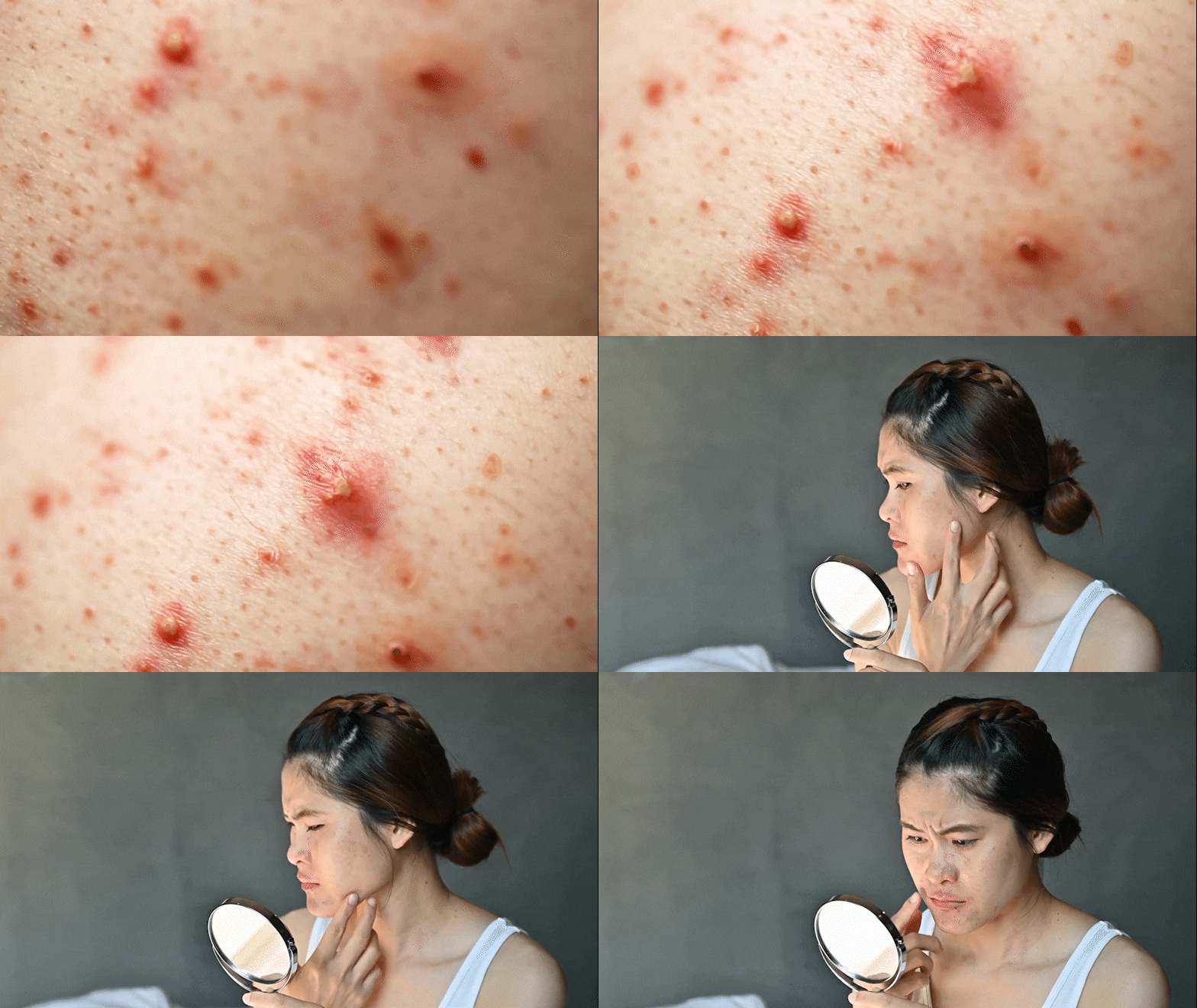
Close-up of skin with inflamed red acne pimples.
If there is an active infection at the treatment site or active inflammatory acne, treatment should be done only after the skin has calmed down.
If you have been diagnosed with a keloid-prone constitution, please consult thoroughly and choose the appropriate treatment.
We do not recommend treatment during pregnancy or breastfeeding, or if less than six months have passed since you stopped taking isotretinoin (an acne medication).
If your skin has suffered severe sunburn or you have an active pigmentary disorder, we recommend treatment only after full recovery.
Please follow these points after treatment
▶ Avoid harsh cleansing and makeup for 2–3 days after treatment ▶ Scabs must fall off naturally, so never peel them off by hand ▶ Sunscreen is essential; we recommend SPF 50 or higher ▶ Avoid alcohol, saunas, and strenuous exercise for one week ▶ You may use regenerative ampoules and moisturizers starting one week after treatment |
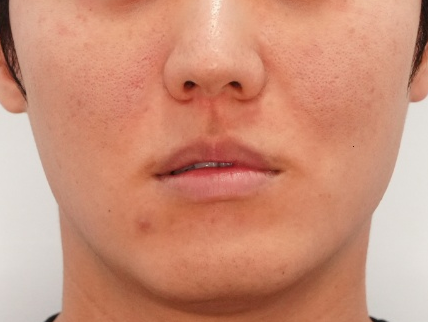
Scars do not disappear dramatically after a single treatment.
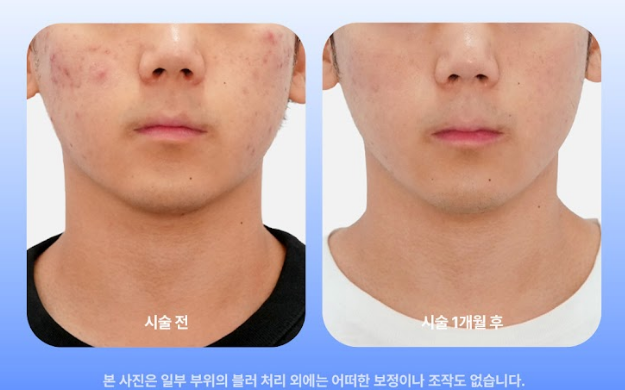
Before and 1 month after treatment on a young man's lower face. Note: no retouching other than blurring some areas.
However, when accurate diagnosis, the right equipment, and a consistent treatment plan come together, you can experience meaningful changes.
If you're wondering whether UltraPulse treatment is right for you, we encourage you to first get a precise assessment of your scar and skin structure through a consultation.



*This post was written directly by Pixel Lab Plastic Surgery Clinic for the purpose of providing medical information and promotion, in compliance with Article 56, Paragraph 1 of the Medical Service Act. All treatments and surgeries carry the possibility of side effects that vary by individual, so we strongly recommend making a decision only after thorough consultation with qualified medical professionals.
Frequently Asked Questions
How long does recovery take after UltraPulse scar treatment?
Most patients recover within about two weeks. Redness and irritation may last for 2 to 3 days after treatment. Recovery varies from person to person, and you can start using regenerative ampoules or moisturizers one week after the procedure.
How many UltraPulse laser sessions do I need?
It depends on the depth and extent of the scar, but gradual improvement is generally noticeable after three or more sessions. Sessions are best spaced 6 to 8 weeks apart. Scars do not disappear dramatically after a single treatment, so a consistent treatment plan is important.
When can I start laser treatment for surgical scars?
Laser treatment for surgical scars is generally started at least three months after surgery. We recommend a consultation first for an accurate diagnosis.
What should I keep in mind after UltraPulse laser treatment?
For 2 to 3 days after treatment, avoid harsh cleansing and makeup. It is important not to peel off scabs by hand and to let them fall off naturally. Use sunscreen with SPF 50 or higher, and avoid alcohol, saunas, and strenuous exercise for one week.
Are there cases where UltraPulse laser treatment should not be done?
Yes, there are. Treatment is not recommended during pregnancy or breastfeeding, or if less than six months have passed since you stopped taking isotretinoin. For keloid-prone skin, treatment should be chosen after thorough consultation, and if there is an active infection or inflamed acne, treatment should wait until the skin has calmed down.
What should I consider first when choosing a scar laser?
It is important to first accurately assess the depth, structure, and shape of a scar, as well as whether it is hypertrophic. Even acne scars that look similar can call for different approaches depending on these factors.