2026-11-08
Potenza Pore Tip vs. Pumping Tip: Which One Suits Your Skin?
Potenza pore tip vs. pumping tip: both are invasive microneedle RF tips with different goals. Learn which one fits your main concern, plus pain, recovery, and who should avoid them.
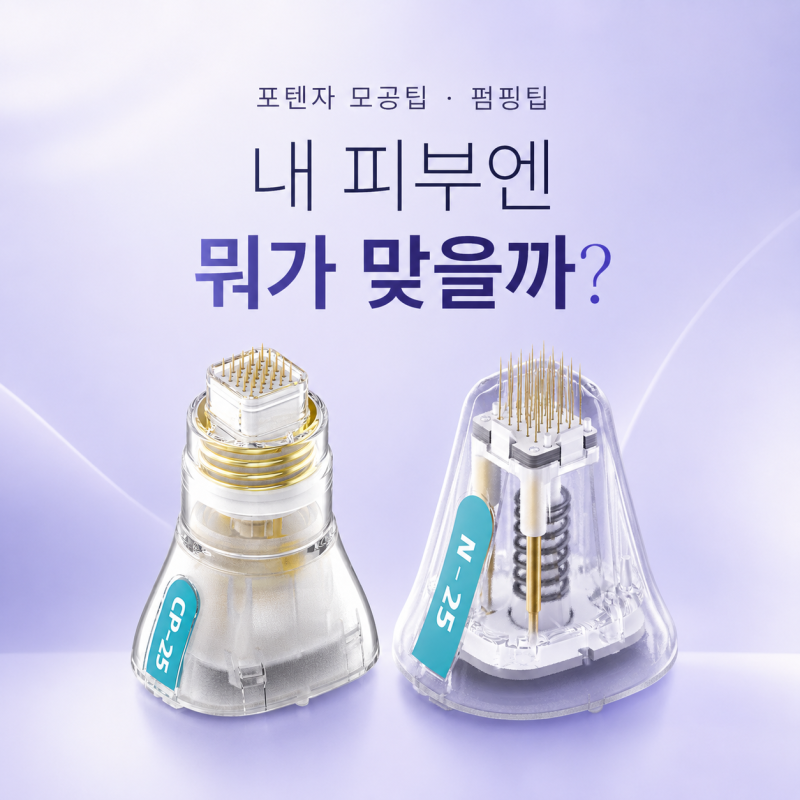
No matter how many reviews you read about the Potenza pore tip and pumping tip, nothing tells you which one is right for your skin. It's probably been frustrating, hasn't it?
Neither tip is better than the other. They are tools with different purposes from the start. One smooths enlarged pores and rough texture, while the other delivers regenerative ingredients to help the skin recover.
Every review I come across says these treatments are great, so which one is actually right for my skin?
Hello,
I'm Dr. Jong-geun Song, director of Pixel Lab Plastic Surgery in Sinnonhyeon. I regularly look into pore and scar concerns together with my patients.
When I see patients looking for Potenza at the clinic, their concerns rarely boil down to just one thing.
Many tell me their enlarged pores bother them, they still have old acne marks, and their skin texture has become rough as well.
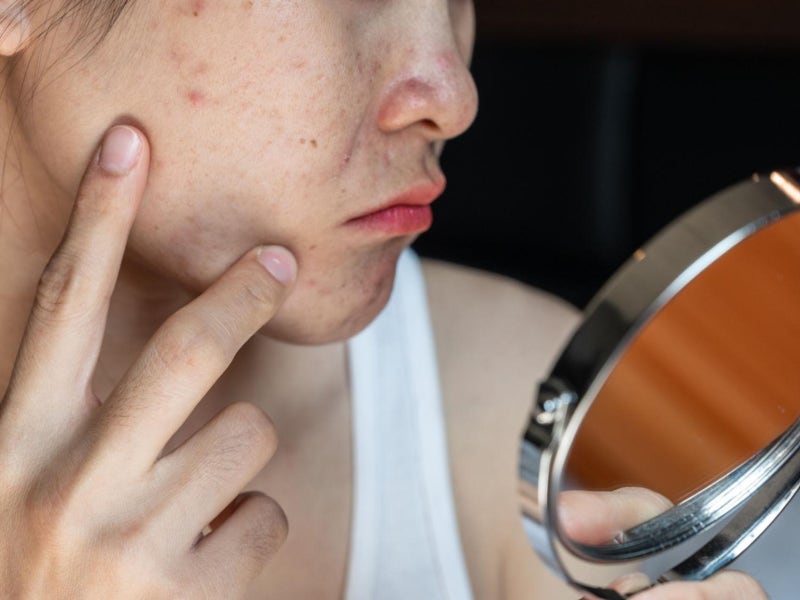
Quite a few people tell me that when they take off their masks, or when their makeup looks patchy and their pores stand out, the first thing they do in front of the mirror is sigh.
I completely understand how they feel.
That's why so many people search for “Potenza pore tip vs. pumping tip” first.
But it's not easy to tell from simple explanations alone how the two actually differ or which one suits your skin. Today, as a physician who performs these treatments myself, I'll break down the differences for you.
Why is Potenza so often mentioned for pores and scars?
The Potenza pore tip and pumping tip discussed in this article are invasive microneedle RF tips that deliver high-frequency thermal energy into the dermis through fine needles.
Needle depth and energy are adjusted to each patient's skin condition, and the thermal stimulation delivered to the dermis promotes skin repair and collagen remodeling. On this basis, it can be used to address pores, acne scars, and rough skin texture together.
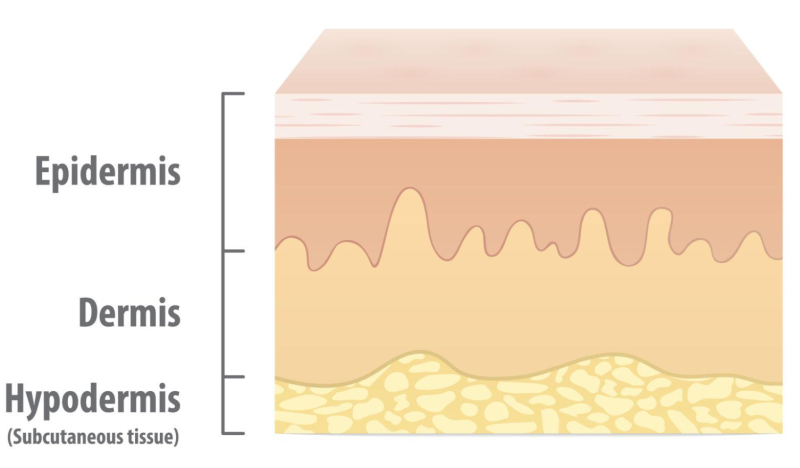
Cross-section diagram of skin, labeled with three layers: epidermis, dermis and hypodermis (subcutaneous tissue).
The key is adjusting needle depth and energy to match the condition of each patient's skin.
Even for the same pores or acne scars, skin thickness, scar shape, and depth differ, so the layer and amount of energy delivered must be carefully calibrated. Even with the same device and tip, the skin's response can vary depending on these settings.
How are the pore tip and pumping tip different?
To understand the difference between the Potenza pore tip and pumping tip, we need to start right here.
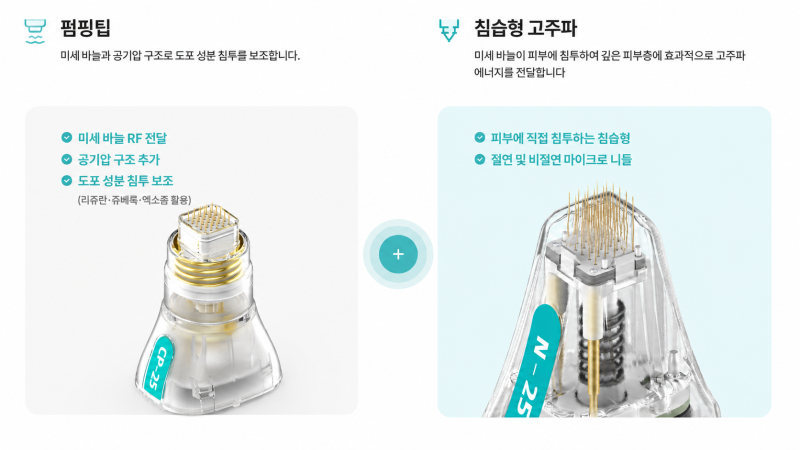
Both the pore tip and the pumping tip covered in this article are invasive tips in which fine needles penetrate the skin. The difference isn't that one uses needles and the other doesn't. It lies in whether the focus is on the high-frequency stimulation itself, or whether the tip also assists the penetration of topically applied ingredients into the skin.
Invasive Type – Pumping Tip
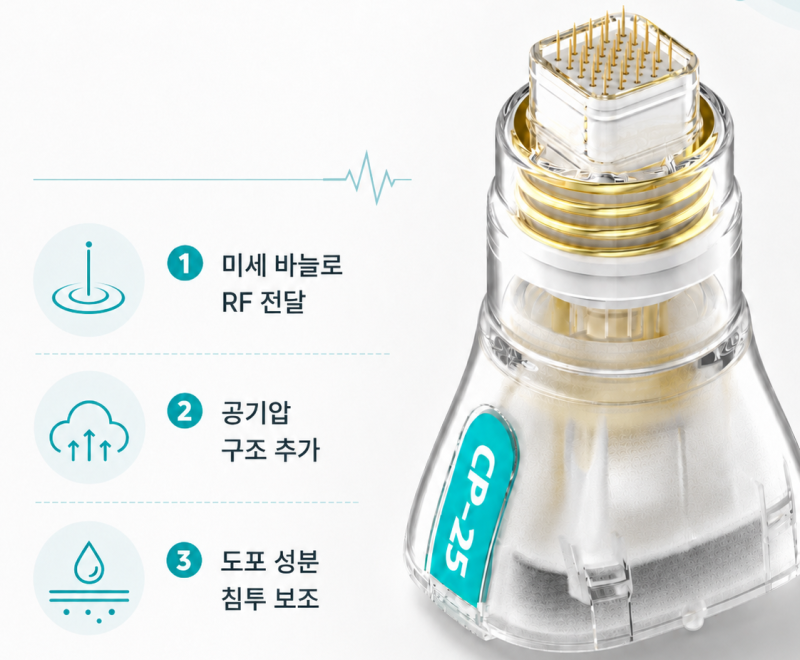
Like the pore tip, the pumping tip is an invasive tip in which fine needles penetrate the skin to deliver high-frequency energy.
What sets it apart from a standard needle tip is the addition of an air-pressure mechanism that drives skin-booster ingredients applied to the skin (such as Rejuran or Juvelook) through the fine channels created by the needles. In other words, it helps the applied ingredients penetrate the skin along those microchannels.
So the most accurate way to understand the pumping tip is as a tip that combines microneedle RF with assisted penetration of topically applied ingredients.
Invasive Type – Pore Tip
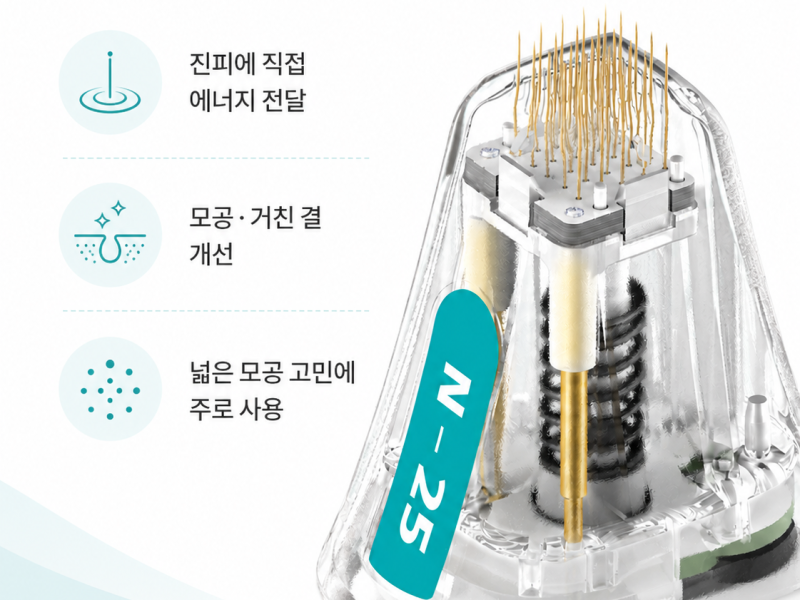
With the pore tip, fine needles at the tip penetrate the skin and deliver high-frequency energy to the dermis.
What people commonly call the “pore tip” is a convenient shorthand for the microneedle RF tip used to treat pores, skin texture, and depressed acne scars. Through fine needles, it delivers high-frequency energy to the dermis, creating a microscopic heat reaction in the tissue. As the skin heals afterward, it promotes collagen remodeling.
It's easiest to understand as a tip focused on the fine needles and high-frequency stimulation itself, rather than on drug delivery.
If you'd like to learn more about how each tip is used, check out the article below.
▼
So which one is right for my skin?
The difference between the Potenza pore tip and pumping tip ultimately comes down to purpose.
When I decide between the two, the first thing I look at is the patient's main concern.
Here's how I make that distinction in my clinic.
|
Depending on the properties of the topical ingredients and the condition of the skin, combining the two can be considered, but results and recovery vary from person to person.
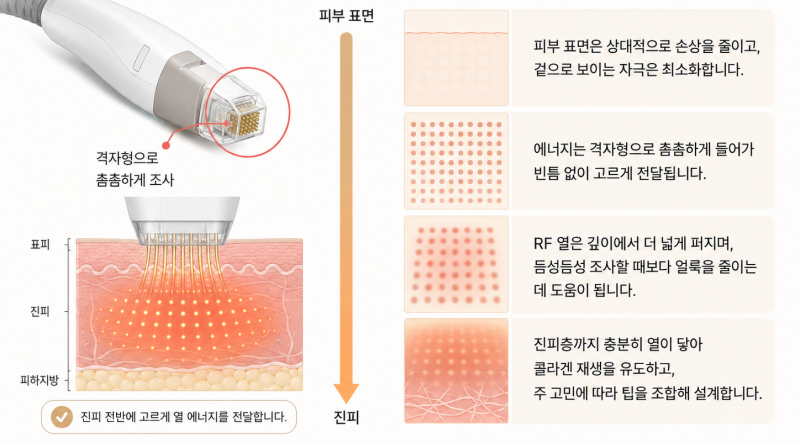
So rather than choosing one or the other, I see it as a combination built around the patient's main concern.
At our clinic, rather than applying a fixed number of shots across the board, we check the treatment area, skin thickness, and scar distribution so that the necessary areas are treated evenly. The number of shots matters less than adjusting depth, energy, and treatment intervals together.
How much pain and downtime should I expect?
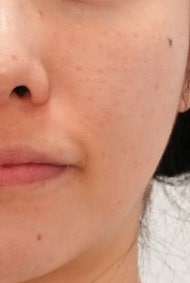
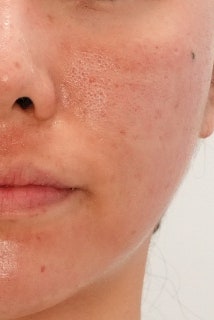
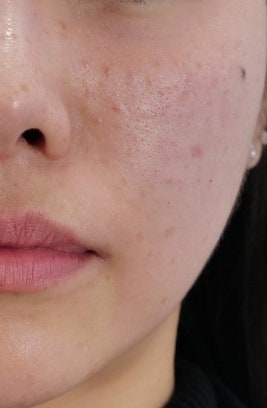
Close-up of a cheek with scattered faint red marks and visible pores.
Since this procedure uses needles, I won't tell you it's completely painless.
That said, with numbing cream applied generously and the depth and energy adjustable, most patients say it's tolerable.
Right after treatment, the face may look red and feel warm, but this usually settles within 1 to 3 days.
Tiny crusts or a rough texture may form on the treated area. This is a temporary healing response that can appear after needle stimulation.
It's best not to pick at them; let them fall off naturally.
When I don't recommend it

This is something ads rarely mention: Potenza is not a cure-all.
Results for scars vary with depth and the skin's response, and it's difficult to remove every scar completely.
The number of sessions needed and when changes become visible depend on the severity of the pores or scars, the skin's response, and the tip and energy used.
Rather than a single session, a series of treatments spaced at set intervals is sometimes considered, but the number of sessions can't be standardized for everyone.
So I honestly don't recommend it for anyone who wants to be finished in one go or can't spare even a few days for recovery.
I may also not recommend it, depending on your condition, if you have frequent recurrences of herpes simplex, a keloid constitution or an autoimmune disease, or if you are pregnant, so consultation before treatment is essential.
If your main concern is pigmentation such as melasma, a different approach is more appropriate. Raised scars that protrude above the skin also require a different treatment direction from typical atrophic acne scars.
Rather than applying the pore tip or pumping tip across the board, the activity and shape of the scar should be assessed first, and a separate treatment method should be considered.
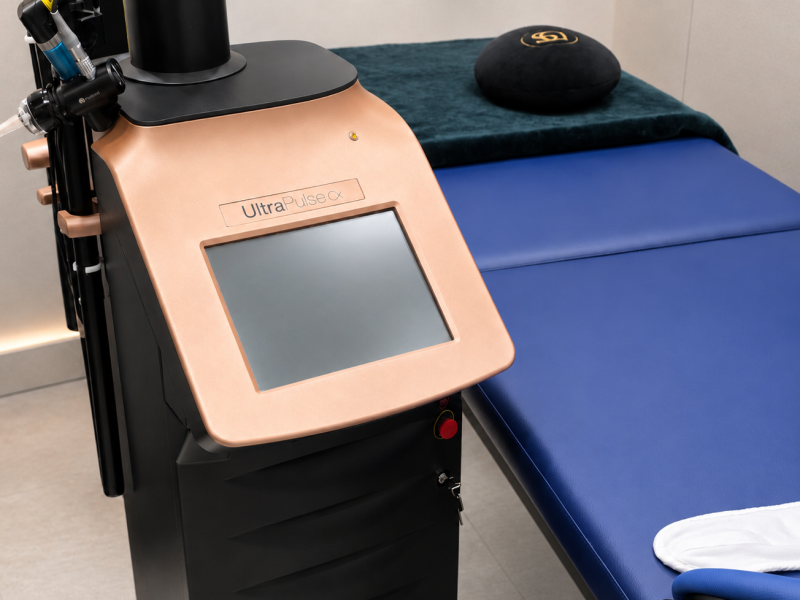
An UltraPulse CX device with a rose-gold panel stands beside a blue treatment bed.
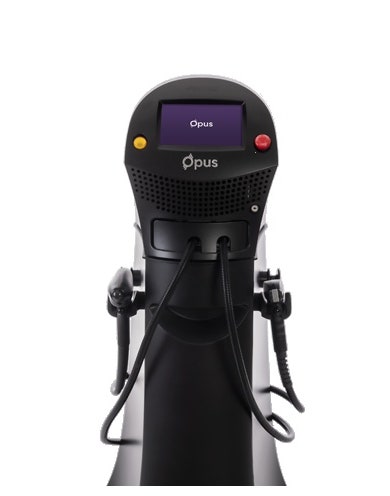
Front view of an Opus device with its screen, cables and handpieces.
At Pixel Lab, when pores or scars need more aggressive treatment, we sometimes consider the UltraPulse laser or Opus as well.
Frequently Asked Questions
Q. What's the difference between the Potenza pore tip and pumping tip, in a nutshell?
The pore tip focuses on tissue remodeling using microneedle RF, while the pumping tip is an invasive RF tip with the added function of assisting the penetration of topically applied ingredients.
Q. How many sessions should I get?
Think of the first three sessions as laying the groundwork. Changes build up when you keep up regular maintenance from the fourth session onward.
Q. Can it help if I'm concerned about both pores and loss of firmness?
Because it stimulates the dermis, it can help with pores and texture while also improving firmness, so it tends to suit people with overlapping concerns (results vary by individual).
Q. Can I get both the pore tip and the pumping tip?
Depending on your skin condition, combining them can be considered. Whether to do both on the same day or separately is decided after reviewing the treatment area, energy level, ingredients used, and available recovery time.
I hope this overview of the Potenza pore tip and pumping tip differences has helped you make a decision.
That said, even with the same concern, skin condition and recovery vary from person to person, and the same results aren't guaranteed in every case.
The final decision should be made after a medical professional examines your skin in person.
If you have any more questions, feel free to leave them in the comments.




*This post was written directly by Pixel Lab Plastic Surgery Clinic for the purpose of providing medical information and promotion, in compliance with Article 56(1) of the Medical Service Act. All treatments and surgeries carry a possibility of side effects depending on the individual, so we strongly recommend making a decision only after thorough consultation with qualified medical professionals.