2026-10-31
Juvelook Volume Longevity: Myths vs. Facts and a Complete Guide to Why “Hilo-Berook” Is Different
Explains why Juvelook Volume can seem to fade early, how collagen timing affects results, and how the combined Hilo-Berook treatment aims to extend volume.
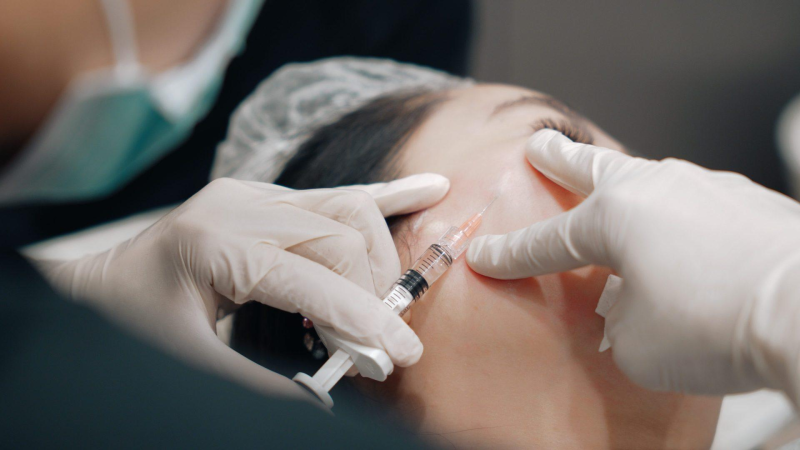
If Juvelook Volume seemed to wear off sooner than you expected, the cause often lies not in the product but in the environment your skin provides for making collagen.
I design treatments that strengthen both that collagen-making environment and your volume at the same time.
This is why Pixel Lab Plastic Surgery offers “Hilo-Berook,” a combination treatment designed around the characteristics of both ingredients.

Hello,
I am Song Jong-geun, CEO and chief physician at Pixel Lab Plastic Surgery in Sinnonhyeon.
As a board-certified plastic surgeon with 15 years of experience, I provide laser treatment for scars and pores, along with lifting and volume treatments. Before every procedure, I use 3D skin analysis equipment (Metaview) to assess your skin first, and then decide on the treatment area and dose.
I got all three sessions of Juvelook Volume, but about six months later it feels like it has sunk back in. Is it just me?
This is what I hear most often in the clinic. Comments like “the effects feel shorter than I expected” and “the volume seems to build up too slowly” come up often, too.
To put it plainly, your skin isn’t the problem. It’s more likely that the reference point you’re using to judge how long Juvelook Volume lasts is off.
1. Why Does Juvelook Volume Seem to Wear Off So Quickly?
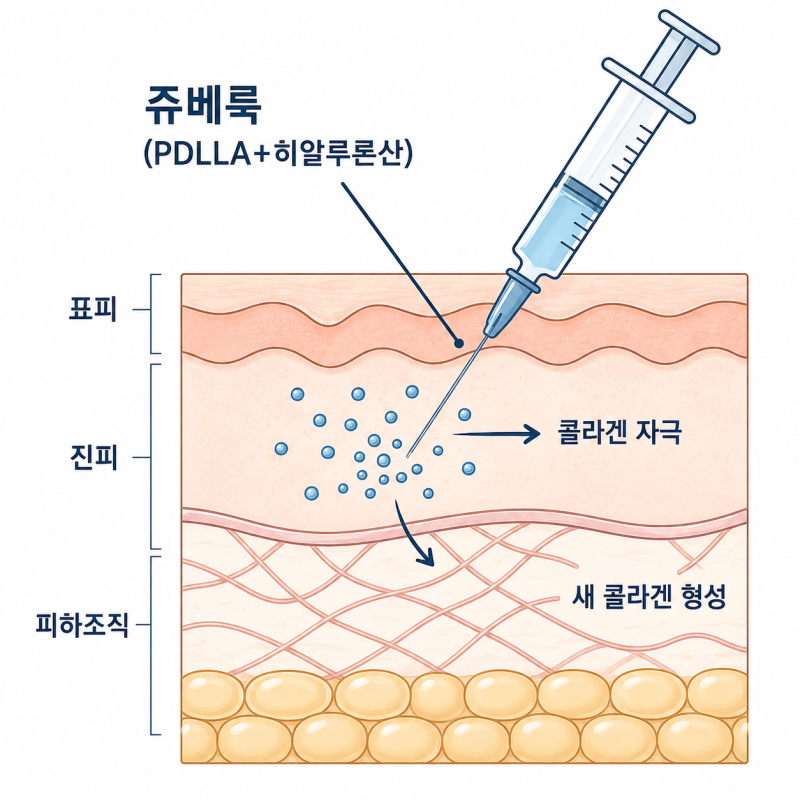
Skin-layer diagram: Juvelook (PDLLA + hyaluronic acid) injected into the dermis, labeled 'collagen stimulation' and 'new collagen formation'.
The “sinking” many people feel isn’t an actual loss of volume. More often, it’s the phase after the initial moisture fades and before collagen has fully formed.
Juvelook Volume is made of PDLLA and HA. HA draws in water to create volume in the early stage, while PDLLA gradually stimulates collagen formation within the skin.
|
So the “sinking” around the two-week mark is better understood not as the end of the effect, but as a stage in which the initial moisture-driven volume decreases.
Juvelook Volume is not like a filler, where the shape created right after injection stays as it is. Because collagen takes time to form, I explain that results should be judged by how things change afterward, not just by how the area looks immediately after treatment.
Related research also reports that the volume seen right after injection may be influenced by the hyaluronic acid included in the product and its particle structure.
(Source: Park JY et al., Skin Research and Technology, 2026)
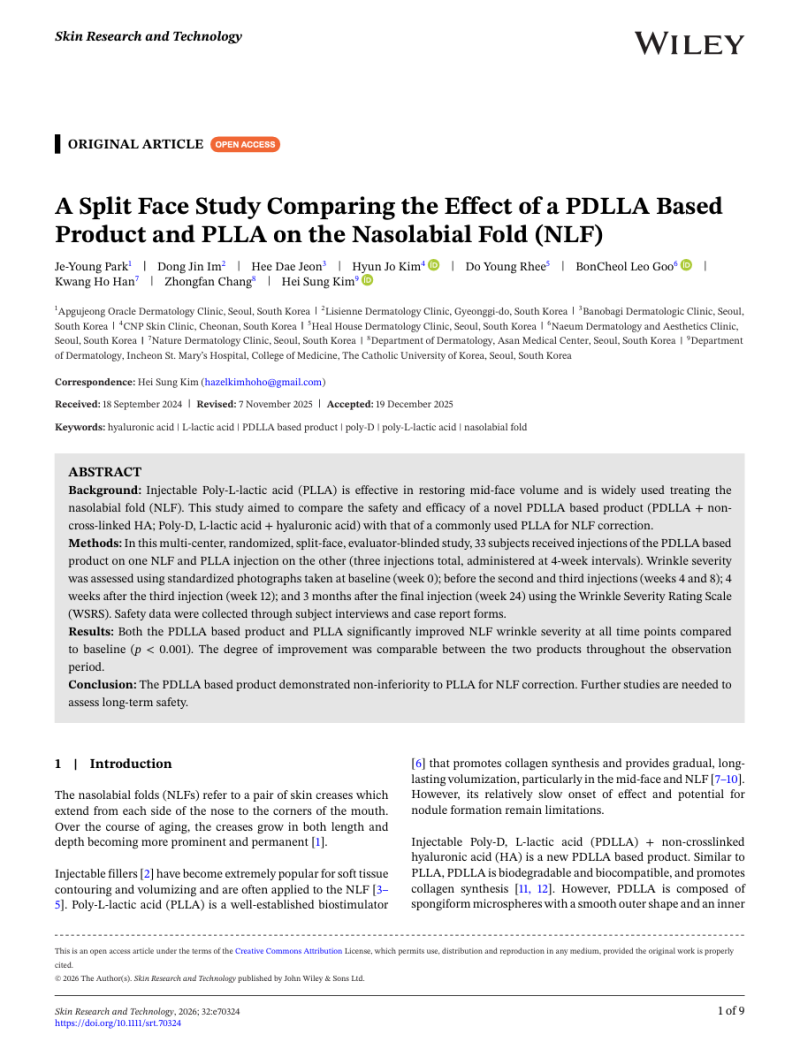
First page of a split-face study in Skin Research and Technology comparing a PDLLA-based product with PLLA for nasolabial folds.
2. What I Check First When Assessing How Long Results Will Last
Before deciding on a dose, I look at your skin’s baseline condition first. My clinical criteria come down to the following three points.
|
In practice, even people of similar age who received similar doses can differ in satisfaction. Looking back, the difference has mostly come down to the skin’s baseline condition. Just as sowing seeds on dry ground differs from sowing them in fertilized soil, collagen also needs an environment in which to grow.
That’s why, when someone asks how to extend how long Juvelook Volume lasts, I don’t start by recommending more sessions.
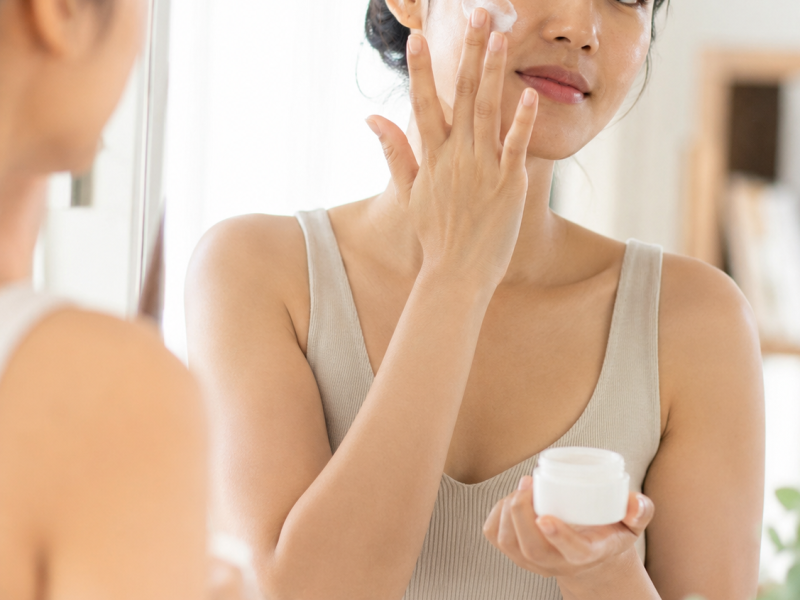
Basic at-home care such as sun protection and moisturizing helps protect newly formed collagen. If this isn’t addressed, simply adding sessions often doesn’t noticeably change the results.
3. Three Reasons I Recommend “Hilo-Berook” (Juvelook Volume + Hiloweave)
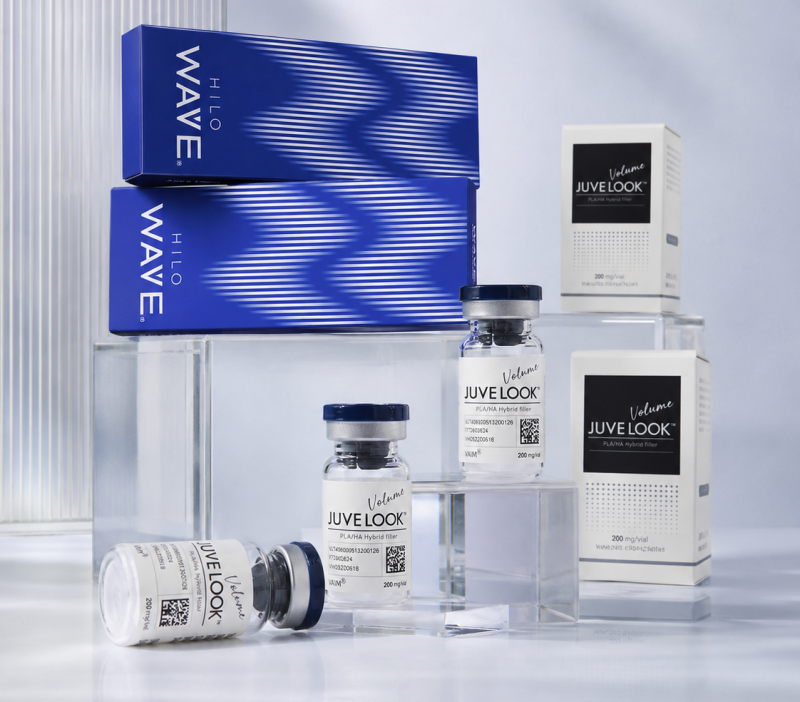
If your skin’s environment itself is lacking, I recommend Hilo-Berook. It combines Hiloweave with Juvelook Volume and injects them together.
The Hiloweave injected alongside is a biostimulator (a treatment that stimulates the skin to regenerate on its own) that combines high- and low-molecular-weight hyaluronic acid.
It contains 24 mg of hyaluronic acid per 1 cc, and because its cross-linking agent content is significantly lower than that of fillers, the risk of nodules is relatively low. (Based on manufacturer product data)
There are three reasons I recommend this approach.
|
Category | Juvelook Volume alone | Hilo-Berook |
Composition | PDLLA + HA | Juvelook Volume + dual hyaluronic acid (high- and low-molecular-weight HA) |
Injection layer | Subcutaneous layer (both products) | |
Initial volume | Fills up with the co-injected HA Appears to shrink around 2 weeks as moisture drops | Cross-linked HA is added, tends to support the early phase |
Collagen volume formation | After 4 weeks, PDLLA induces collagen | Same, plus HA helps create an environment in which collagen can grow |
Main areas | Nasolabial folds, lateral cheeks, anterior cheeks | |
Recommended interval | Based on 3 sessions at about 1-month intervals | At least one month apart, 3–5 sessions |
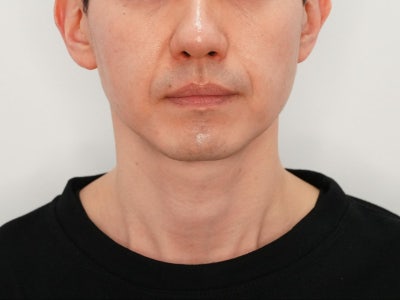
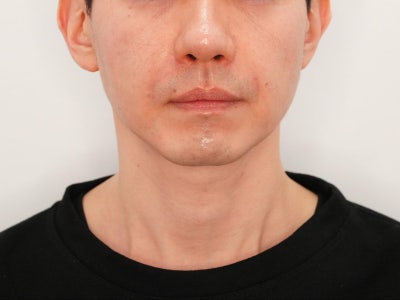
Another front-view photo of the same man's lower face and neck, taken with the same framing.
Front view of a man's lower face and neck against a plain white background.
If you found that the effect faded quickly after about a month following Juvelook Volume treatment, Hilo-Berook focuses on addressing exactly that window.
It is designed so that results don’t drop off sharply before your next session and continue more steadily, with the aim of improving satisfaction with how long the results last.
Treatment is generally planned at intervals of at least one month over 3–5 sessions, though the exact number and timing may vary depending on your skin condition.
4. When I Don’t Recommend the Combined Treatment
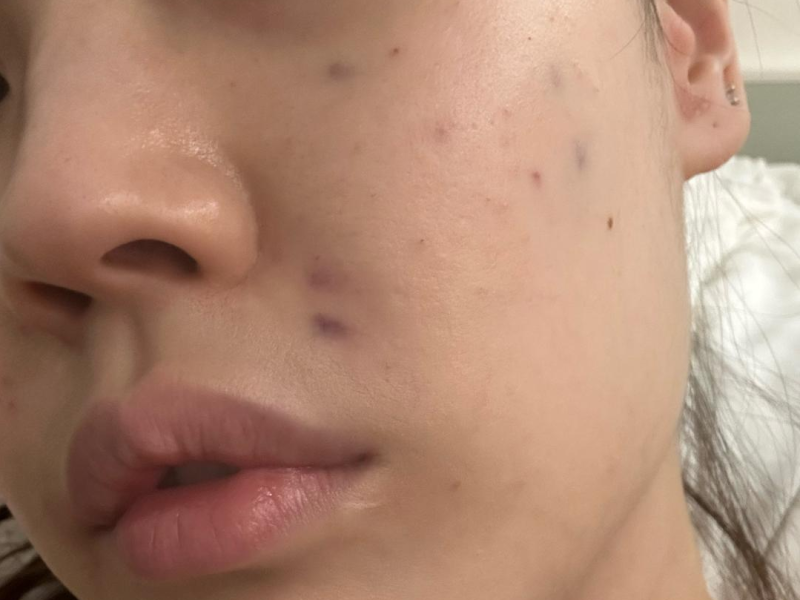
Close-up of a woman's cheek showing several small purple bruises and red dots.
I’ll also share the limitations that advertising tends to leave out.
|
5. Frequently Asked Questions
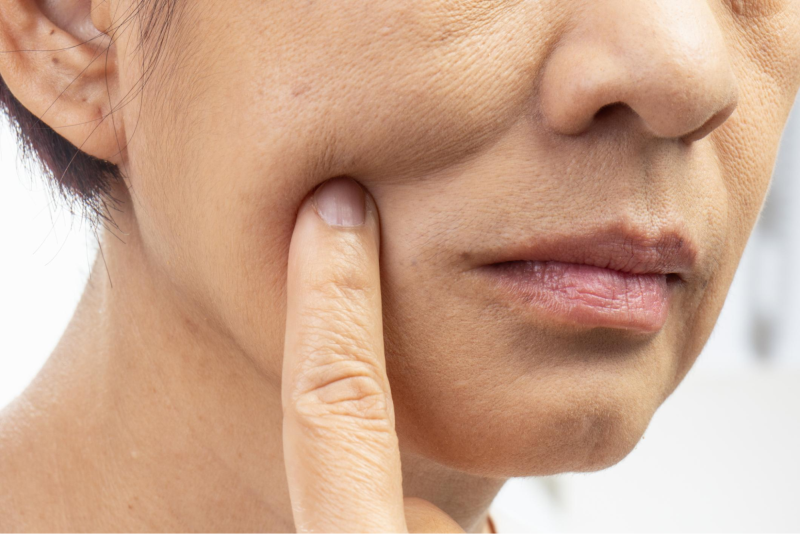
Q1. Is Hilo-Berook the same as Hiloweave?
No. Hilo-Berook involves Hiloweave and Juvelook Volume injected together.
Q2. Do you receive Hilo-Berook in two separate sessions?
No. The two products are mixed and injected together. The areas and doses are determined during consultation.
Q3. I’ve already had Juvelook Volume. Can I still get Hilo-Berook?
In many cases, yes. However, the interval is decided based on when your last treatment was and how much volume remains.
Q4. How is it different from filler?
Fillers shape the contour, while Hilo-Berook replenishes collagen and moisture together. Areas that need a defined shape, such as the nose or chin, are better suited to filler, while broadly sunken areas such as the nasolabial folds and lateral cheeks tend to suit Hilo-Berook.
Q5. How does Hilo-Berook differ in how long results last?
If you felt that results faded quickly after one month with Juvelook Volume alone, Hilo-Berook is designed to fill in that disappointing gap so that changes continue more steadily. So rather than simply “lasting a few months longer,” the difference lies in addressing the stretch where you feel results start to decline.
◆ Check it out now
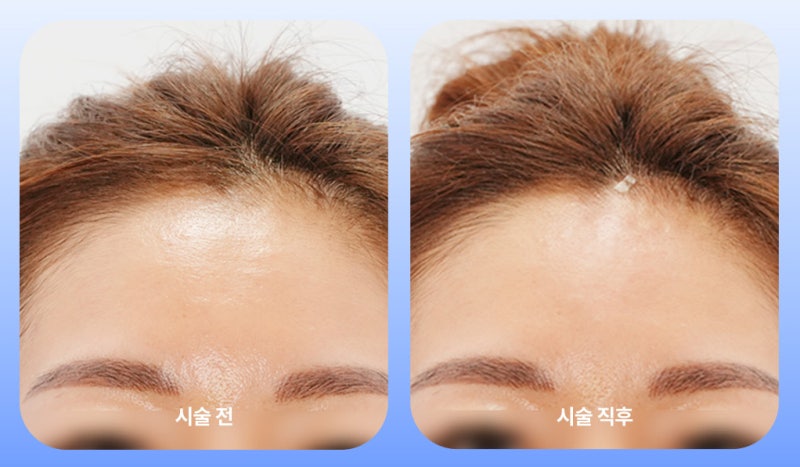
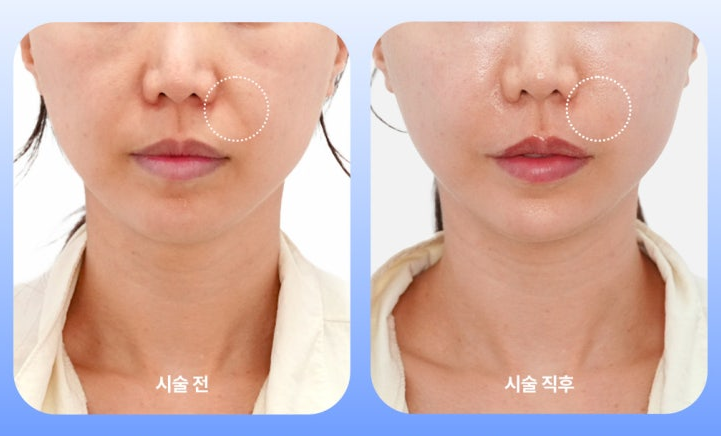
Lower-face photos labeled "Before treatment" and "Right after treatment", with a dotted circle marking the area beside the nose.
The reasons Juvelook Volume didn’t last as long as you’d hoped vary from person to person.
How much volume remains, whether the nasolabial folds or lateral cheeks should be filled first, and whether your skin is a good match for Hilo-Berook all need to be evaluated in person.
If you’re deciding whether to top up because of how long your Juvelook Volume has lasted, I recommend checking how much volume you still have first.
Using 3D skin analysis, I look at your skin condition and sunken areas together, then plan whether Hilo-Berook is right for your skin and how to set the number of sessions and intervals, without pushing beyond what is reasonable.
You can check how to book a consultation and the treatment process via the link below.




*This post was written directly by Pixel Lab Plastic Surgery Clinic for the purposes of providing medical information and promotion, in compliance with Article 56(1) of the Medical Service Act. All treatments and surgeries carry the possibility of side effects that vary by individual, so we strongly recommend making a decision only after thorough consultation with qualified medical professionals.
[References] Park JY, Im DJ, Jeon HD, et al. A Split Face Study Comparing the Effect of a PDLLA Based Product and PLLA on the Nasolabial Fold (NLF). Skin Research and Technology. 2026;32:e70324. doi:10.1111/srt.70324