2026-11-02
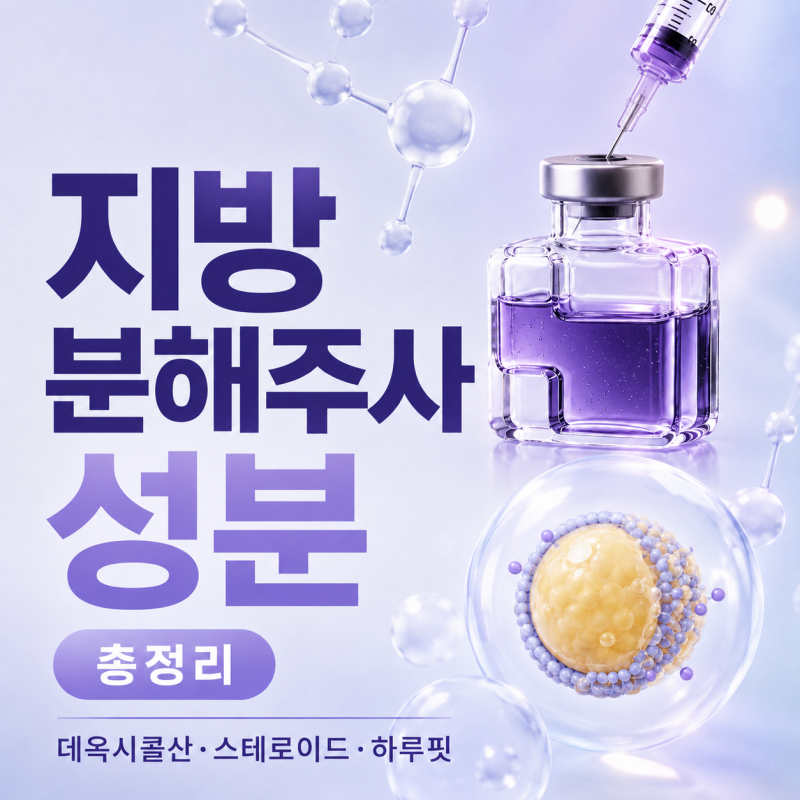
Fat-Dissolving Injection Ingredients Explained | Deoxycholic Acid vs. Steroids and How to Choose Harufit
A guide to fat-dissolving injection ingredients, comparing deoxycholic acid and steroids, plus how to choose Harufit Red, Green, or Purple based on area and fat thickness.
Fat-dissolving injections may share the same name, but their reactions and expected effects can differ depending on ingredients such as steroids or deoxycholic acid.
That is why it is important to first check the area you want to reduce and the condition of your fat layer before treatment.
Today, I will summarize the characteristics of each fat-dissolving injection ingredient and the criteria for choosing based on treatment area and fat thickness.
Hello,
I am Dr. Song Jong-geun, Director of Pixelab Plastic Surgery in Sinnonhyeon.
As a board-certified plastic surgeon with 15 years of experience, I have been directly examining subcutaneous fat distribution and skin elasticity in the face, arms, and abdomen, and designing contours tailored to each area.
¶ Aren't all fat-dissolving injection ingredients basically the same?

Many people think of fat-dissolving injections as a single procedure, but in reality, formulations vary by clinic and product. Online, they are often described simply as "injections that melt fat." However, such explanations alone are not enough. So today, I will explain in detail the ingredients themselves, which are the most important factors to consider when deciding on a fat-dissolving injection.
Even among fat-dissolving injections with the same name, I recommend checking the following three points separately:
|
¶ Are fat-dissolving injections containing steroids always bad?
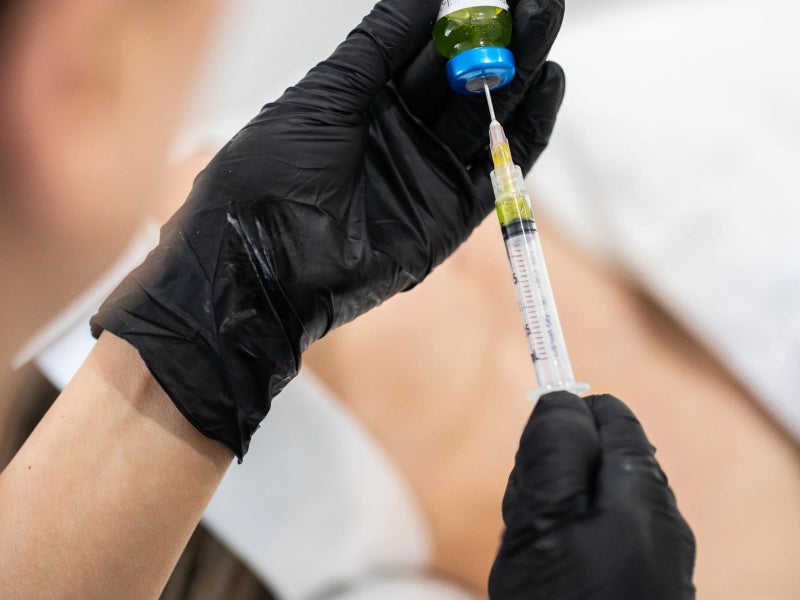
In the past, steroids were often included as supporting ingredients in fat-dissolving injections to reduce the inflammation and swelling that can occur after treatment and to help decrease the sense of volume.
Steroids themselves do not directly break down fat. However, by easing swelling and inflammatory responses, they help reduce post-treatment discomfort, and by inducing temporary tissue shrinkage, they can help contours look more defined in the early stages.
So, are fat-dissolving injections containing steroids always bad? Not necessarily.
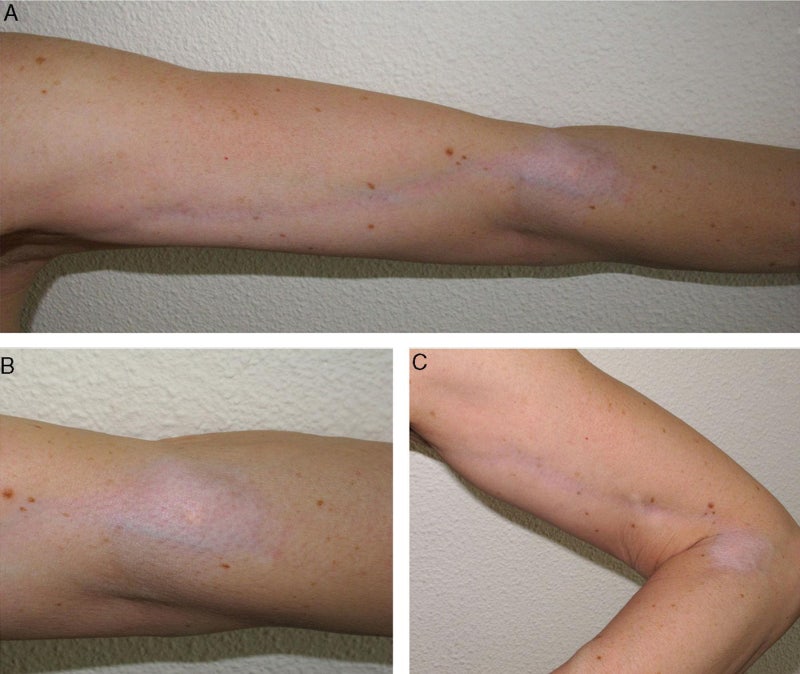
Clinical photos (A–C) of an arm with a pale, discolored patch near the elbow and a faint streak running along the arm.
However, using excessive volumes in the same area or repeating treatments at short intervals can thin the skin and subcutaneous fat, and may cause indentations or asymmetry, so caution is needed.
Therefore, rather than judging an ingredient as good or bad based solely on whether it contains steroids, it is important to check the concentration, total volume, injection site, and treatment interval together.
|
¶ How do the ingredients in Harufit Red, Green, and Purple differ?
Harufit is a fat-dissolving injection developed in-house by Pixelab based on 15 years of clinical experience, and a patent is currently pending.
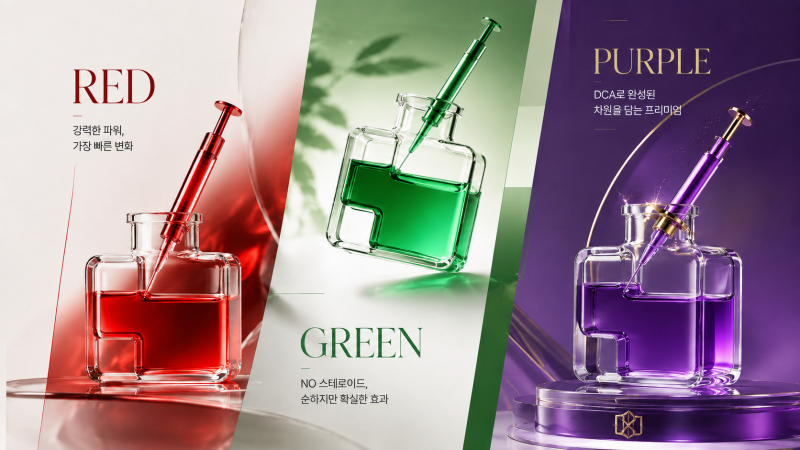
Depending on the thickness and condition of the fat layer in the treatment area and the direction of the change you want, you can choose the type that suits you among three options: Red, Green, and Purple.
Type | Ingredient Features | When to Consider |
Red | Contains steroids | For those who want to reduce post-treatment swelling and inflammation while first seeing early contour changes |
Green | Non-steroidal | For those who want to avoid steroids and achieve gradual changes through repeated care |
Purple | Contains deoxycholic acid, non-steroidal | For those with a relatively well-defined fat layer who want active, localized fat reduction that directly targets fat cells |
Among the three Harufit types, Purple is the premium option that takes the most active approach.
Because it contains deoxycholic acid, which acts directly on fat cell membranes, it is typically chosen for areas with a relatively well-defined fat layer that have not responded to diet and exercise alone.
However, this also means the injection sites and volumes must be designed with greater precision.
¶ What exactly is deoxycholic acid?
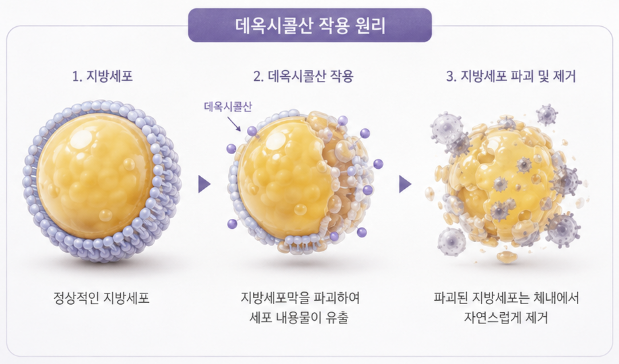
Deoxycholic acid is a type of bile acid that our bodies naturally produce to aid in fat digestion.
Here is how it works: it acts directly on fat cell membranes, breaking down their structure and destroying the fat cells. The destroyed fat cells and their contents are then gradually eliminated through the body's metabolic processes and circulation.
A key feature is that it acts directly on the fat cells themselves, rather than simply reducing swelling or temporarily shrinking fat cell size.
This means it can be used to refine contours in areas with a distinct fat layer that are difficult to address with exercise or diet alone. However, the degree of reaction, swelling, and tenderness can vary depending on concentration, injection volume, and injection layer, so precise treatment planning that takes into account the fat thickness of each area is essential.
Related studies also report that reactions differ depending on injection depth and concentration. In particular, if the solution is injected too shallowly by mistake, there is a risk of skin damage, so injection depth is directly linked to safety. That is why I pay the closest attention to injection depth and location when performing treatments.
Swelling and warmth that appear for several days after treatment can be seen as a sign that an inflammatory response is underway at the treatment site. However, the degree of reaction and recovery speed vary from person to person, and the possibility of side effects cannot be entirely ruled out.
¶ Will arm fat come off more easily if the ingredient is stronger?
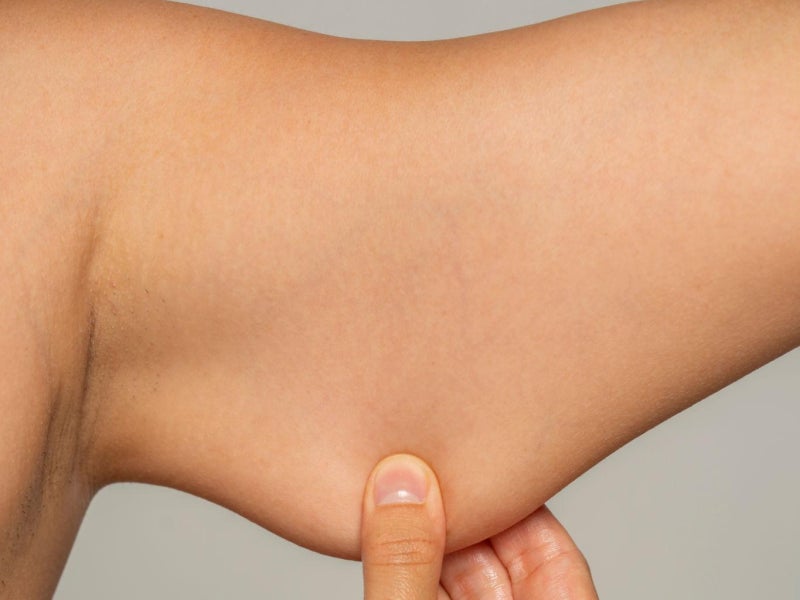
This is what I emphasize most in my practice. For arm fat-dissolving injections, how evenly the product is distributed over a wide area matters more than how strong the ingredient is.
The arms cover a much larger area than the face, and the thickness of the fat layer varies from spot to spot. For this reason, injecting a large volume into one spot can make the surface look uneven or cause the two arms to appear different in thickness.
I look at the contour lines along the outer and inner arm and the back of the armpit separately, check skin elasticity and tissue condition, and then distribute the injection points and volumes accordingly. This is because the results depend on where and how the same amount is divided and injected.
¶ When I do not recommend it

Fat-dissolving injections are not right for everyone. Depending on the situation, I may first recommend skin-tightening treatments such as Body Ondas or Body InMode, or suggest reducing overall body fat through diet and exercise and then refining only specific areas with injections.
|
¶ Frequently Asked Questions (FAQ)
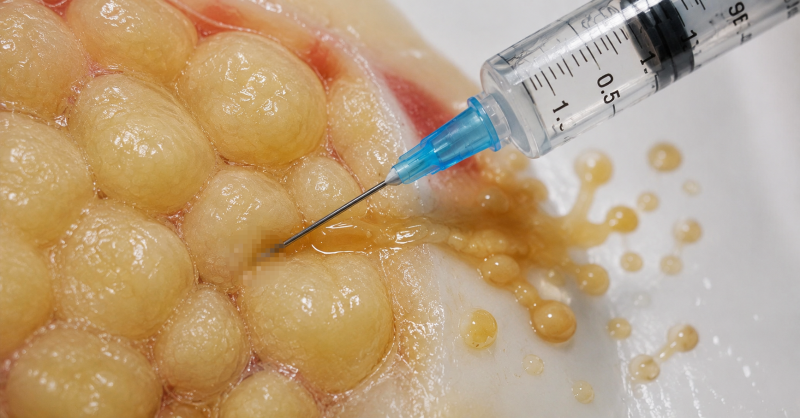
Q1. Do you use different ingredients for different areas?
Yes, I approach each area differently. Wide areas such as the arms or abdomen require a plan that divides injections across multiple points, while areas with a thin fat layer, such as the double chin, require more precise control of injection depth.
This is why the type and formulation of Harufit may vary depending on the area and fat condition.
Q2. What should I be careful about after a fat-dissolving injection?
Swelling, tenderness, and warmth may last for several days at the injection site, so it is best to avoid irritating the area.
Right after treatment, I do not recommend heavy drinking, saunas, or intense exercise. Contour results are more effective when combined with a healthy diet and exercise.
If the pain is severe or lasts a long time, please contact the clinic. Reactions vary from person to person.
Q3. What are the effects of deoxycholic acid used in fat-dissolving injections?
Deoxycholic acid is an ingredient that acts directly on fat cell membranes to destroy fat cells and promote the elimination of the destroyed fat cells through the body's metabolic processes.
Because it acts on the fat cells themselves rather than only temporarily reducing their size, it is used for localized contouring in areas with a distinct fat layer.
However, results and post-treatment reactions can vary depending on concentration, injection layer, and injection volume, and there are individual differences.
Ultimately, what matters more with fat-dissolving injections than which ingredients they contain is whether the concentration and volume are designed to suit your specific area and fat layer condition.
Rather than starting by comparing ingredient lists, I recommend beginning by having the area you want to reduce checked directly by a medical professional.
If you have any more questions about choosing a fat-dissolving injection ingredient, feel free to contact us for a consultation anytime.




*This post was written directly by Pixelab Plastic Surgery Clinic for the purpose of providing medical information and promotion, in compliance with Article 56(1) of the Medical Service Act. All treatments and surgeries carry the possibility of side effects that vary by individual, so we recommend making a decision only after thorough consultation with qualified medical professionals.